Laundromat Renovation: The Complete Guide to Maximizing Your Investment
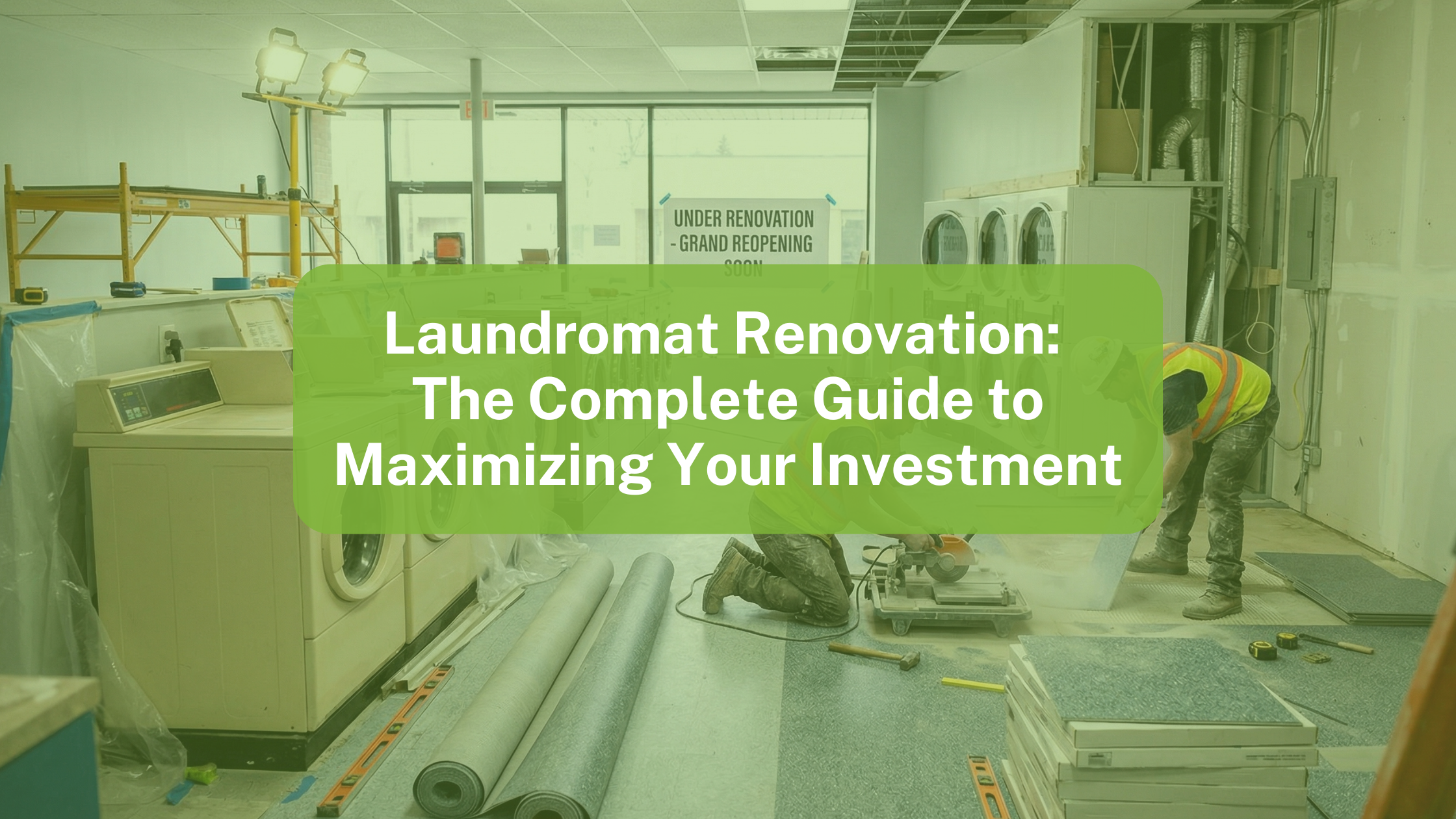
Table of Contents
Laundromat renovation is one of the highest-ROI decisions an owner can make, yet most operators either wait too long or spend in the wrong places. Whether your store has outdated equipment draining utility budgets, a tired interior losing customers to newer competitors, or infrastructure that cannot support modern high-efficiency machines, a well-planned renovation transforms both the customer experience and your bottom line.
Real Clean Group works with laundromat owners across Colorado and Wyoming to plan and execute renovations that pay for themselves through higher vend revenue, lower operating costs, and stronger property valuations. The right renovation partner makes the difference between a costly facelift and a strategic investment that drives real returns.
TL;DR:
A laundromat renovation typically costs between $50,000 and $200,000, depending on scope, and the most successful projects combine equipment upgrades with infrastructure improvements and customer-facing enhancements. Modern ENERGY STAR-certified washers use up to 45% less water and 35% less energy than older models, which translates directly into lower monthly operating costs in water-intensive markets like Colorado. Renovation also supports higher vend pricing: even a modest $0.25 increase per wash across steady volume can add more than $25,000 in annual gross revenue. The key is sequencing the work correctly, starting with plumbing and electrical capacity, then equipment selection, then the customer environment, so every dollar spent compounds rather than conflicts.
Key Points:
Renovation costs vary by scope: Total laundromat renovation budgets typically range from $50,000 for targeted equipment swaps and cosmetic updates to $200,000 or more for full infrastructure overhauls including plumbing, electrical, HVAC, and new equipment.
Equipment is the largest line item: Commercial washers cost between $1,500 and $5,000 each, and commercial dryers range from $2,000 to $6,000 each, so a full retool can represent 60% or more of total renovation spending.
Plumbing and electrical come first: Upgrading utility systems to support high-capacity, high-efficiency machines can cost $20,000 to $50,000 on its own, but skipping this step limits every other improvement you make.
Efficiency gains pay for themselves: According to ENERGY STAR, certified commercial washers use about 45% less water and are on average 9% more energy-efficient than standard models, creating measurable monthly savings.
Customer experience drives revenue: A clean, well-lit, modern laundromat commands premium pricing and attracts new customers. Store condition directly affects both revenue and how a business is valued if you decide to sell.
Renovation supports higher vend prices: Owners who upgrade equipment and refresh their store environment can often justify price increases that flow directly to profit, since most core expenses like rent and baseline utilities are fixed.
Timing matters: Industry guidance suggests retooling every 10 to 20 years. However, if breakdowns are increasing, competitors are investing, or your machines lack modern payment options, waiting costs more than acting.
Colorado water costs add urgency: Denver Water continues to raise commercial rates year over year, and water districts across the Front Range are following suit. Efficient equipment reduces exposure to rising utility costs.
For a detailed renovation assessment and free ROI report tailored to your operation, connect with Real Clean Group.
““The owners who get the best results from a renovation are the ones who start with infrastructure, not aesthetics.””
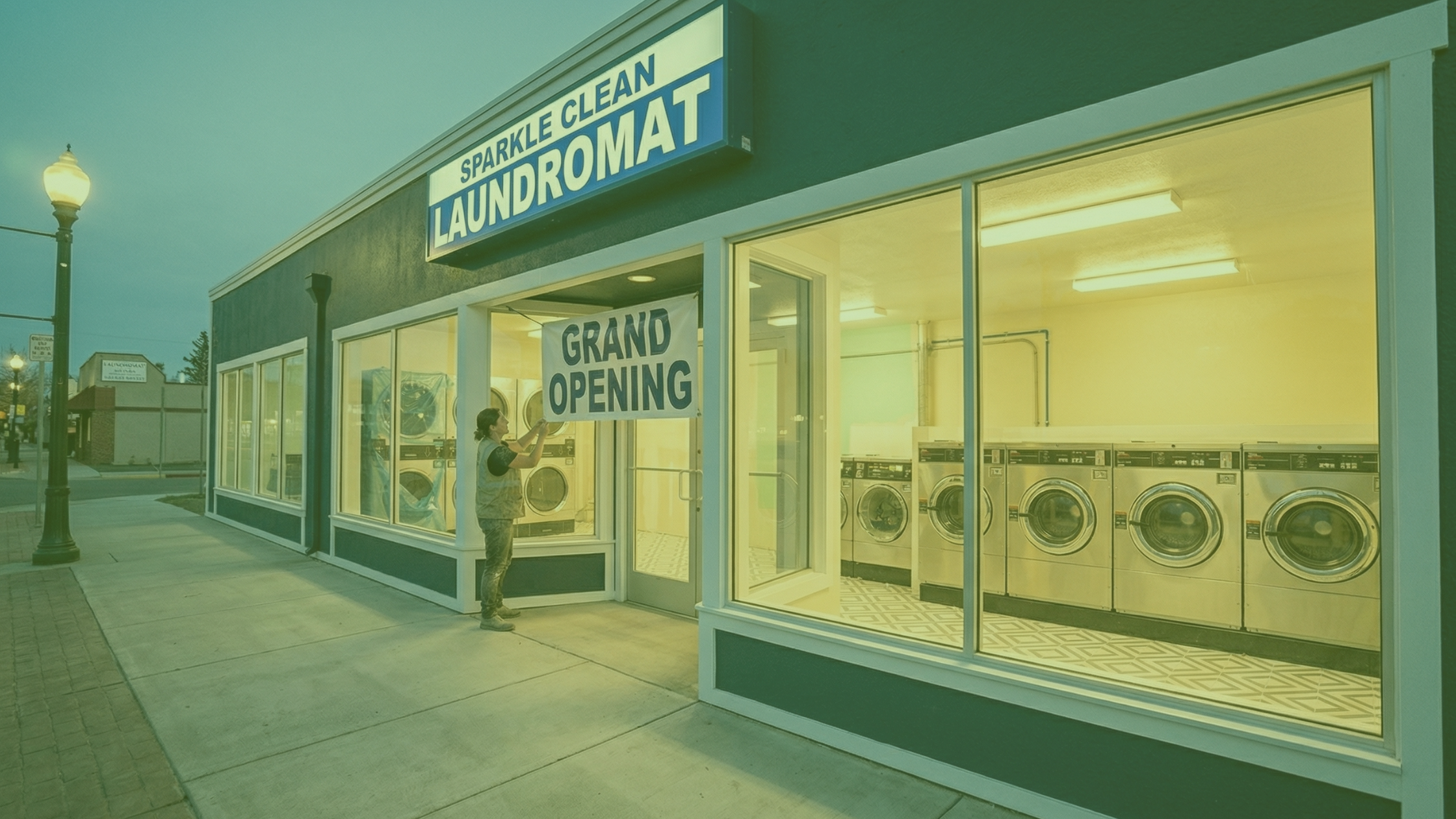
Why Laundromat Renovation Pays Off
Renovation is not just about making a laundromat look better. It is about rebuilding the financial engine of the business.
According to IBISWorld, the U.S. laundromat industry generates over $7 billion in annual revenue, even as the total number of laundromats has been declining. That means surviving stores are capturing more revenue per location. The operators winning that share are the ones investing in their facilities.
A renovated laundromat generates returns in three ways. First, modern equipment lowers utility and maintenance costs. Second, an improved environment supports higher vend prices. Third, the overall business valuation increases because laundromats sell for a multiple of net earnings, typically three to five times net cash flow according to the Coin Laundry Association. Every dollar of reduced expense or increased revenue multiplies at sale time.
The Coin Laundry Association reports that utility costs average approximately 21% of gross revenue for laundromat operators. In Colorado, where Denver Water continues to raise commercial water rates year over year, that percentage can climb higher for stores running older, inefficient machines. A laundromat renovation that targets water and energy consumption directly protects your margins against costs you cannot otherwise control.
What a Laundromat Renovation
Actually Costs
Understanding realistic cost ranges prevents both underspending and overspending. Every laundromat renovation is different, but the major categories are consistent.
Infrastructure and Utilities
Plumbing and electrical upgrades form the foundation of any serious laundromat renovation. Most spaces require modifications to support high-capacity, high-efficiency commercial equipment. According to industry cost data, plumbing and electrical work alone can range from $20,000 to $50,000. This includes upgrading water supply lines, drainage capacity, gas piping, electrical panels, and circuit capacity to match the demands of modern machines.
In Colorado, altitude affects gas appliance performance and HVAC sizing. A renovation partner familiar with Front Range conditions can spec equipment and ventilation correctly the first time, avoiding expensive corrections later.
Equipment
Equipment is typically the single largest expense in a laundromat renovation. A full retool with new commercial washers and dryers can range from $100,000 to $300,000 or more, depending on the number of machines and the mix of capacities. However, not every renovation requires replacing all equipment at once. Phased approaches, where you replace the oldest or least efficient machines first, can spread the capital outlay while still delivering measurable improvements.
Interior and Customer Environment
Flooring, lighting, paint, seating, folding areas, and signage typically add $15,000 to $50,000 to the renovation budget. These costs are more flexible than infrastructure or equipment, but they directly affect customer perception and willingness to pay premium prices. Lighting is especially important: LED fixtures reduce energy costs while making whites look cleaner coming out of the machines, reinforcing the perception of quality.
Total Budget Range
When all categories are combined, laundromat renovation budgets generally fall between $50,000 and $200,000 for most projects. Full ground-up rebuilds with new construction elements can exceed that range. The right budget depends on the current condition of your facility, the competitive landscape, and your financial goals for the next five to ten years.
The Right Renovation Sequence
The order in which you execute a laundromat renovation matters as much as the budget. Getting the sequence wrong means paying twice for work that should have been done once.
Step 1: Assess Infrastructure Capacity
Before selecting any new equipment, evaluate your plumbing, electrical, gas, drainage, and ventilation systems. Can they support higher-capacity washers with faster fill rates? Is your electrical panel sized for modern dryer circuits? Do your drain lines handle the flow from high-extract washers? Real Clean Group starts every renovation project with a full infrastructure assessment to answer these questions before any equipment decisions are made.
Step 2: Plan the Equipment Layout
Once you know what your infrastructure can support (or what upgrades it needs), plan the equipment mix and floor layout. This is where revenue optimization happens. Replacing several small top-load washers with fewer, larger front-load units can increase revenue per square foot while reducing the total number of machines you maintain. According to PlanetLaundry, this approach is central to maximizing profit per square foot in a retool.
Step 3: Execute Utility Upgrades
With the layout finalized, complete all plumbing, electrical, gas, and HVAC work before any new equipment arrives. This minimizes downtime and prevents damage to new machines during construction.
Step 4: Install Equipment
New equipment installation should be coordinated to minimize the number of days your store is partially or fully closed. An experienced distributor like Real Clean Group manages delivery scheduling, utility connections, and machine programming as a single coordinated process.
Step 5: Refresh the Customer Environment
With the infrastructure and equipment in place, finish with customer-facing improvements: flooring, paint, lighting, signage, seating, and folding surfaces. This is also the time to add or upgrade your payment system to accept cards and mobile payments. According to American Coin-Op industry surveys, the majority of laundromat operators now offer multiple payment options, and customers increasingly expect that flexibility.
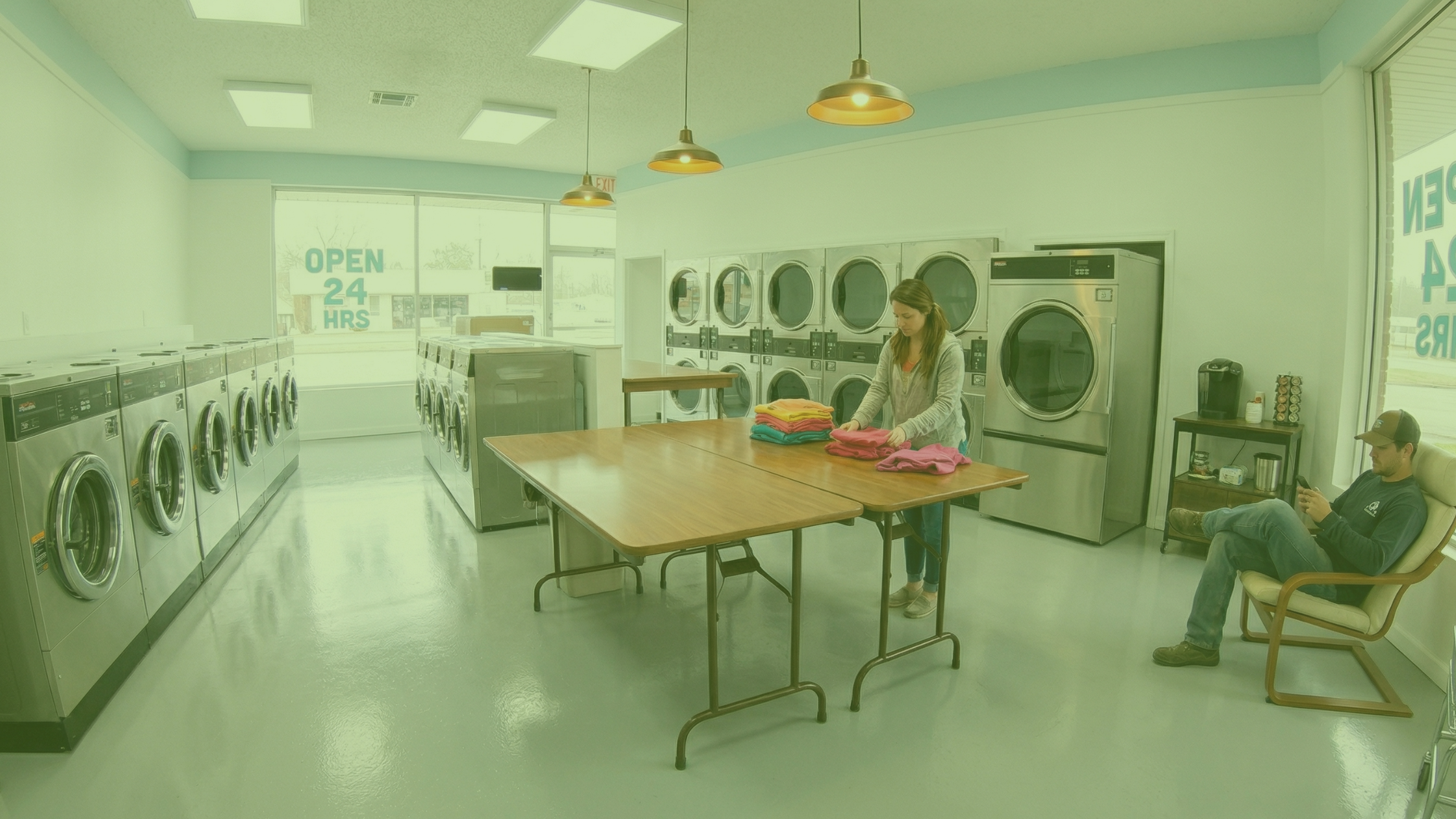
Equipment Upgrades That Drive the Biggest Returns
Not all equipment upgrades deliver equal returns. Focus on the changes that compound savings over time.
High-Efficiency Washers
ENERGY STAR-certified commercial washers use approximately 45% less water and are about 9% more energy-efficient than standard models. For a laundromat running dozens of cycles per day, those savings accumulate rapidly. In Colorado, where water costs continue to rise, the payback period on high-efficiency washers is often shorter than in markets with cheaper water.
High-extract washers (200 G-force or higher) also remove more water during the spin cycle, which reduces drying time. That means faster turns, lower dryer energy costs, and more revenue per machine per day.
Larger-Capacity Machines
Replacing smaller top-load washers with 40-pound, 60-pound, or even 80-pound front-load units allows customers to wash more laundry per cycle at a higher vend price. This is one of the clearest paths to increased revenue in a laundromat renovation. Customers are often willing to pay significantly more per cycle for the convenience of washing an entire household load in a single machine.
Modern Payment Systems
Upgrading from coin-only to hybrid payment systems that accept credit cards, debit cards, and mobile wallets removes friction for customers and reduces cash-handling overhead. Modern controls also enable flexible pricing strategies such as premium cycle options, time-of-day pricing, and promotional discounts that can be adjusted remotely.
Dryer Efficiency
Replacing old dryers with models featuring sensor-drying technology and improved airflow reduces energy consumption and prevents over-drying. Pairing high-extract washers with efficient dryers creates a compounding effect: clothes enter the dryer with less moisture, so they dry faster and use less gas or electricity per load.
Customer-Facing Improvements That Justify Higher Pricing
A clean, modern, comfortable laundromat earns the right to charge more. Store condition directly affects both customer loyalty and business valuation.
Lighting
Lighting is one of the most impactful and cost-effective upgrades in a laundromat renovation. LED fixtures consume less energy than fluorescent alternatives and produce a true, white light that makes clothes look cleaner. Good lighting also improves perceived safety and comfort, which matters for customers who spend 45 minutes to an hour in your store per visit. Avoid yellow-toned or fluorescent lighting that makes whites appear dingy.
Flooring
Choose durable, water-resistant flooring that is easy to clean and comfortable for customers standing for extended periods. Luxury vinyl plank and commercial-grade tile are popular choices. Avoid tile that creates excessive noise from machine vibrations or foot traffic.
Seating and Folding Areas
Comfortable seating and ample folding surfaces are basic expectations for a renovated laundromat. These are relatively inexpensive additions that significantly improve the customer experience. Consider bench seating with easy-to-clean surfaces and wall-mounted folding shelves in high-traffic areas.
Signage and Branding
Updated exterior and interior signage signals that the business is active and well-managed. New signage is especially important if your store has been operating with the same look for years. In competitive markets along Colorado's Front Range, visibility from the road can determine whether a new customer walks in or drives past.
Sequence is everything. Upgrading equipment before fixing infrastructure means paying for plumbing and electrical work around machines you just installed. The right order saves time, money, and headaches.
Top 5 Signs Your Laundromat Needs a Renovation
Repair costs are climbing. When you are spending more on fixing old machines than it would cost to finance new ones, the math has already shifted in favor of replacement. Track repair costs per machine over time, and compare that trend against monthly payments on modern equipment.
Competitors have upgraded. If a nearby laundromat has retooled with new machines, updated its interior, and started accepting card payments, your customer base is at risk. According to American Coin-Op, more than 70% of laundromat owners report improved business after reinvesting in their stores.
Utility bills keep rising. Older machines use dramatically more water, gas, and electricity than current models. If your utility costs are consuming more than 20% of gross revenue, equipment efficiency should be the first line item in your renovation plan.
Your machines lack modern features. Customers increasingly expect card and mobile payment options, cycle modifiers, and larger-capacity machines. If your store cannot offer those features, you are leaving revenue on the table and giving customers a reason to switch to a competitor.
You are considering selling. Renovating before a sale might seem counterintuitive, but a store with new equipment, modern infrastructure, and strong financials commands a significantly higher multiple. The investment often more than pays for itself in the sale price.
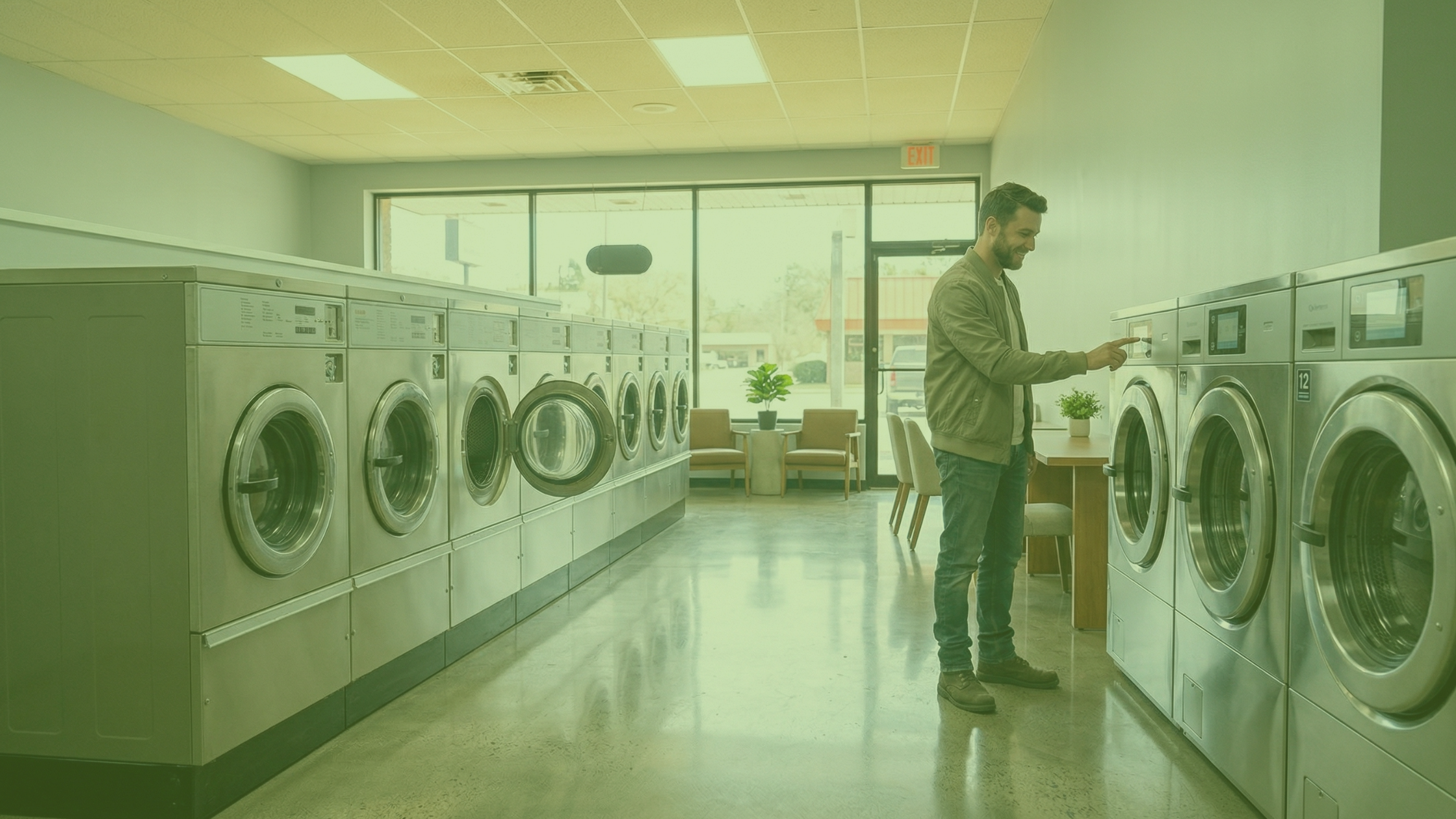
Conclusion
A laundromat renovation is a strategic investment that improves every metric that matters: lower operating costs, higher revenue per cycle, stronger customer retention, and increased business valuation. The operators who thrive in the years ahead will be the ones who invest methodically, starting with infrastructure, then equipment, then the customer environment, in a sequence that maximizes the return on every dollar spent.
Real Clean Group brings over half a century of combined commercial laundry expertise to renovation projects across Colorado and Wyoming. From initial infrastructure assessments to equipment selection, installation, and ongoing service, RCG manages every phase of a laundromat renovation as a single, coordinated project. With more than 500 projects completed and a 99% uptime guarantee on service and maintenance, Real Clean Group is the full-service partner that helps your renovation pay for itself.
Ready to see what a renovation could do for your operation? Request a free ROI assessment and get a clear picture of the costs, savings, and revenue potential for your specific store. You can also explore how reducing machine downtime fits into a broader renovation and maintenance strategy.