Card Operated Laundromat: The Complete Guide to Going Cashless
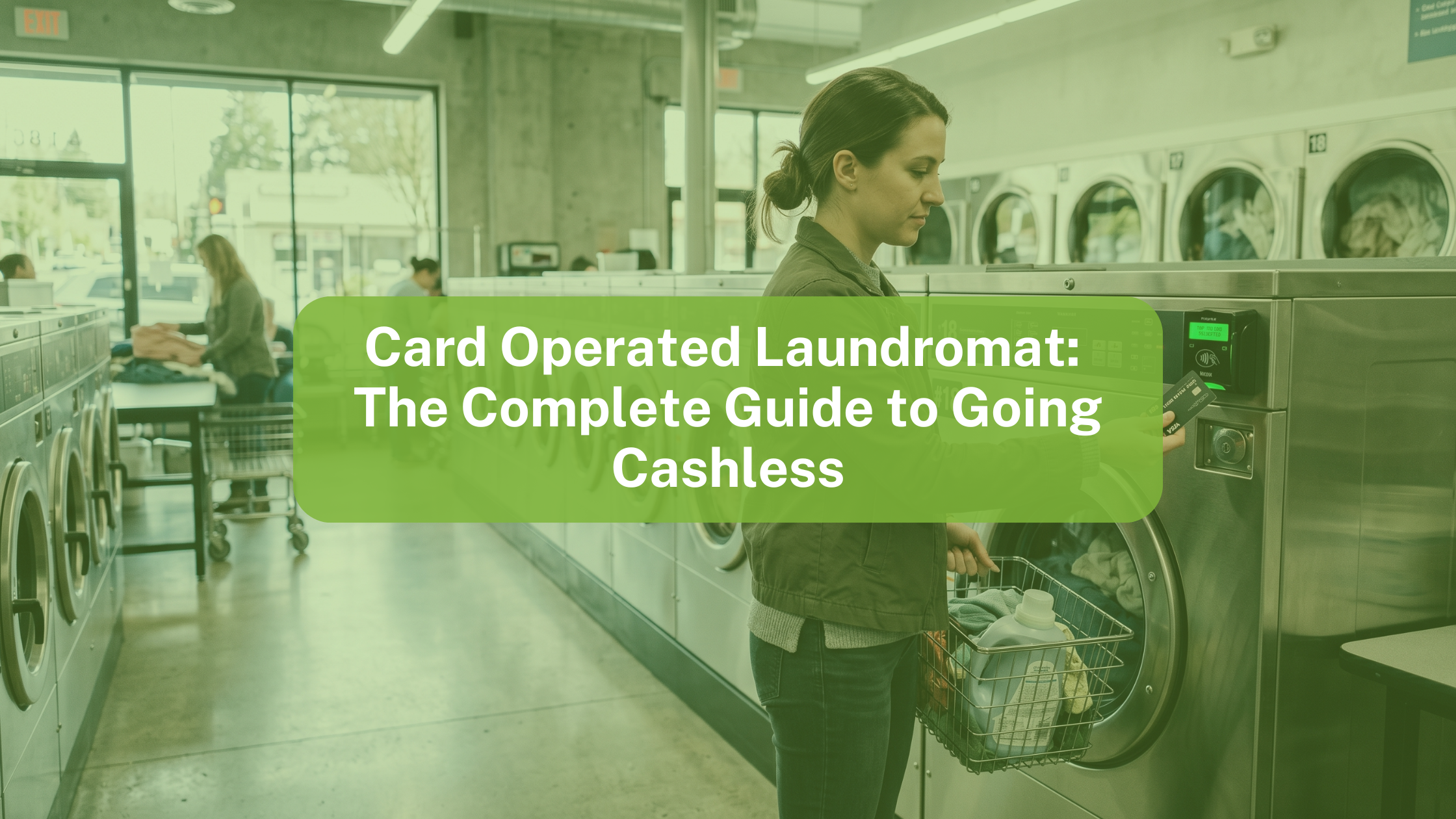
Table of Contents
A card operated laundromat gives owners more control over pricing, stronger security, and a better experience for customers who stopped carrying quarters years ago. Whether you are converting an existing coin-only store, opening a new location, or adding card readers alongside your current coin mechanisms, the decision to accept card and mobile payments changes how your business operates at every level. Real Clean Group helps laundromat owners across Colorado evaluate, install, and optimize card payment systems as part of a full-service approach to commercial laundry equipment and operations. The right payment system does more than process transactions. It becomes the data backbone of your entire business.
TL;DR:
Switching from coin-only to a card operated laundromat typically costs between $200 and $2,100 per machine for hardware and installation, with ongoing processing fees of 3% to 5% per transaction. Owners who make the switch consistently report revenue increases of 17% to 22%, driven by higher average spend per visit, reduced friction at the point of payment, and the ability to set prices in any increment rather than quarter-based steps. A hybrid approach that accepts both coins and cards is the most common starting point, and most operators find that the majority of customers migrate to card or mobile payments within a few months. The key is choosing a system that fits your equipment, your customer base, and your long-term operational goals.
Key Points:
Card systems pay for themselves quickly: Industry data shows that laundromats adding card payment see ROI within 3 to 6 months, driven by a 17% to 22% average revenue lift and reduced cash-handling labor.
Retrofit kits work on most existing machines: You do not need to replace your washers and dryers to go cashless. Card readers can be installed on most commercial laundry equipment in 15 to 30 minutes per machine.
Hybrid is the smart starting point: Accepting both coins and cards during a transition period accommodates all customers while the majority naturally migrate to cashless payments.
Flexible pricing unlocks hidden revenue: Card systems let you set prices in any increment, run time-of-day promotions, and offer premium cycle options, all of which are impossible with fixed coin drops.
Data and reporting change how you manage: Every transaction is tracked digitally, giving you real-time visibility into machine usage, peak hours, revenue trends, and maintenance needs.
Security improves immediately: Less cash on the premises means lower risk of theft, vandalism, and internal shrinkage. Digital records also simplify accounting and tax reporting.
Customer expectations have shifted: According to a Forbes study, 76% of consumers prefer businesses that accept card payments, and research shows customers tend to spend more when paying with a card.
Colorado operators face unique considerations: High-altitude locations, varying connectivity in rural Wyoming and mountain communities, and a customer base that skews toward outdoor-oriented, tech-comfortable demographics all affect system selection.
For help evaluating the right card payment system for your laundromat, connect with Real Clean Group for a free consultation.
“We tell every owner the same thing: start hybrid, let the data guide you. Within a few months, you will see exactly how your customers want to pay, and you can adjust from there instead of guessing”
Why Card Operated Laundromats Are Becoming the Standard
The shift from coin-only to card operated laundromats reflects a broader change in how people pay for everything. According to the Coin Laundry Association, over half of U.S. laundromats now accept some form of card or mobile payment. That number has roughly doubled in just a few years, and it continues to climb.
The reason is straightforward: fewer people carry cash. According to CNBC reporting on Federal Reserve data, roughly 30% of American consumers do not use cash for any transactions in a given week. For a coin-only laundromat, that means a growing share of potential customers must make a special trip to an ATM before they can use your machines. Every extra step between "I need to do laundry" and "my clothes are washing" is a reason for that customer to choose a competitor who makes it easier.
Beyond convenience, card systems give operators tools that simply do not exist in a coin-only environment. Real-time revenue reporting, remote price adjustments, machine usage analytics, loyalty programs, and promotional pricing all become possible once transactions are digital. For laundromat owners managing their business alongside another job, or operating multiple locations, the ability to monitor and adjust remotely is a significant operational advantage.
In Colorado and Wyoming, Real Clean Group has seen this transition accelerate across markets of every size. From high-traffic Front Range stores to smaller mountain-town laundromats, card payment systems are becoming a baseline expectation rather than a competitive differentiator.
What It Costs to Convert to a Card Operated Laundromat
Understanding the full cost picture prevents surprises and helps you calculate a realistic payback timeline.
Hardware and Installation
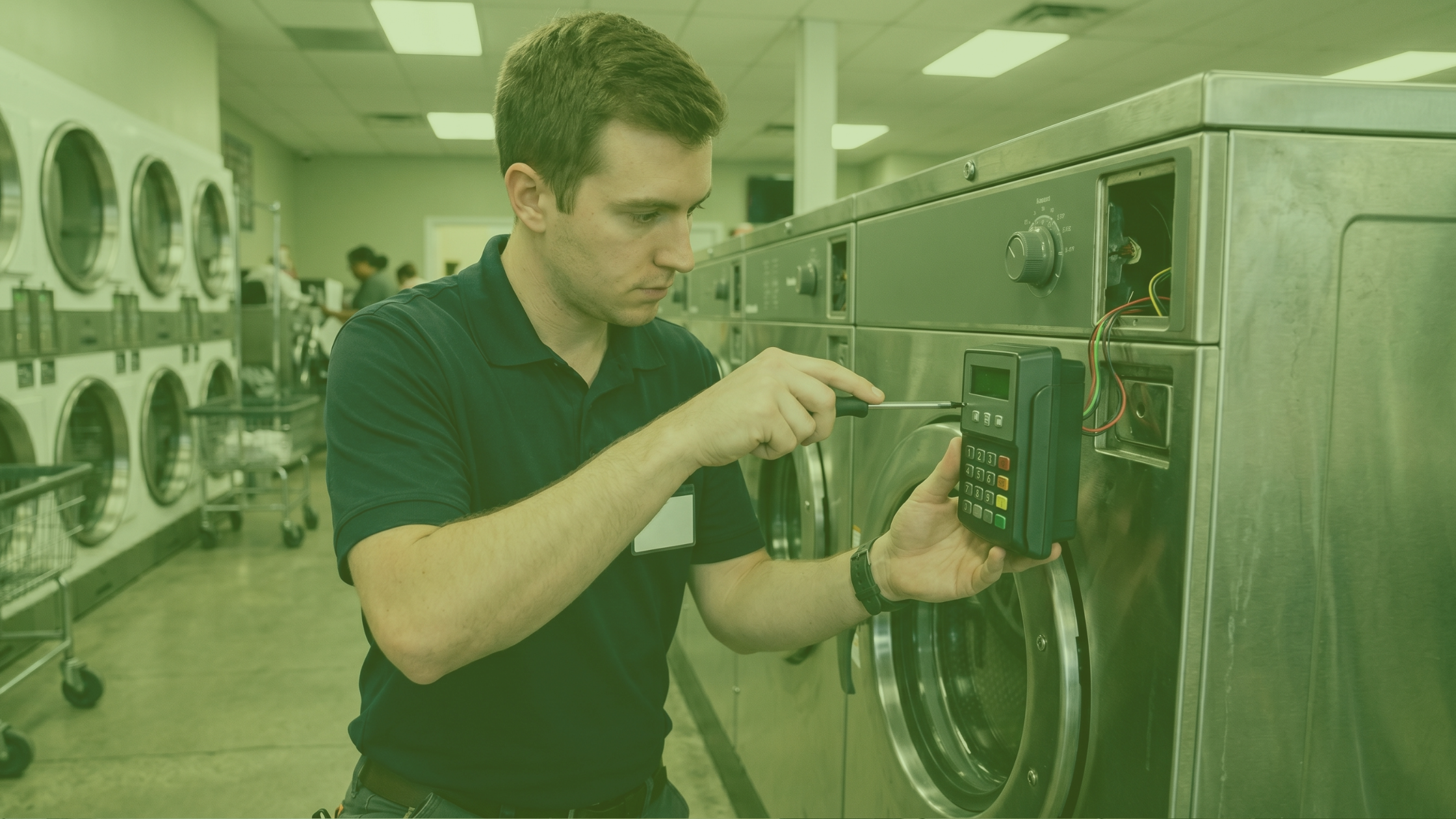
The cost to add a card reader to an existing commercial washer or dryer typically ranges from $200 to $2,100 per machine, depending on the system and its features. Basic retrofit readers that add tap-to-pay and credit card acceptance sit at the lower end. Full-featured systems with screens, multiple pricing tiers, and integrated loyalty programs cost more. Installation is relatively fast. Most experienced technicians can install a reader in 15 to 30 minutes per machine, since modern readers connect to the same wiring as existing coin mechanisms.
For a 20-machine laundromat, total hardware and installation costs generally fall between $5,000 and $15,000. If your system requires a central value-add kiosk (for prepaid card systems), add $3,000 to $8,000 for the kiosk itself.
Ongoing Costs
Card payment systems carry processing fees on every transaction, typically 3% to 5% of the transaction amount. Some vendors also charge monthly software or service fees ranging from $50 to $200 per month for cloud-based management dashboards, reporting tools, and customer support.
The ROI Math
Despite the processing fees, the revenue gains consistently outweigh the costs. Industry data indicates that laundromats adding card payments see an average revenue increase of 17% to 22%. That lift comes from multiple sources: customers spend more per visit when not limited by the cash in their pocket, operators can price in any increment rather than quarter-based steps, and premium cycle options become possible. For most operations, the hardware investment pays for itself within 3 to 6 months.
Start hybrid, let the data guide you. Most operators keep coin acceptance during the transition and find that 80-90% of customers migrate to card payment within the first year.
Types of Card and Cashless Payment Systems
Not all card systems are the same. Understanding the differences helps you choose the right fit for your store, your customers, and your budget.
Open-Loop Credit and Debit Card Readers
These readers accept any Visa, Mastercard, Discover, or American Express card directly at the machine. Customers pay with the card already in their wallet, using swipe, chip insert, or contactless tap. This is the most familiar payment experience for customers and requires no special laundry card or app download. The tradeoff is higher per-transaction processing fees compared to closed-loop systems.
Closed-Loop Prepaid Laundry Cards
In a closed-loop system, customers purchase or load a proprietary card at a central kiosk, then use that card to start machines. The advantage for operators is that you capture customer funds upfront, creating a cash flow benefit from the "float" of money sitting on active cards. Customers with a balance on your card are also more likely to return, building loyalty. The Coin Laundry Association notes that prepaid card systems have been a staple of the industry for decades, though newer open-loop and mobile options are growing faster.
Mobile App and QR Code Payments
App-based systems let customers pay through their smartphone using Apple Pay, Google Pay, or a dedicated laundromat app. Some systems use QR codes on machines that customers scan to initiate payment. These systems often include built-in loyalty programs, cycle notifications, and the ability for customers to check machine availability before arriving. The limitation is that app-only systems can exclude customers who are less comfortable with technology.
Hybrid Systems
A hybrid approach combines coin acceptance with one or more cashless options on the same machine. This is the most common configuration for laundromats transitioning away from coin-only operations. Hybrid systems let you serve every customer preference while collecting data on how quickly your market adopts cashless payments. Most operators find that 80% to 90% of transactions shift to card or mobile within the first year.
How to Convert Your Laundromat: Step by Step
Converting to a card operated laundromat is a straightforward project when the steps are executed in the right order.
Step 1: Assess Your Current Equipment
Start by confirming compatibility. Most commercial washers and dryers from major manufacturers, including Speed Queen, Dexter, Continental Girbau, and UniMac, are compatible with retrofit card readers. Real Clean Group evaluates your existing equipment and recommends the most cost-effective path, whether that is retrofitting current machines, timing the upgrade with a planned equipment replacement, or a combination of both.
Step 2: Choose Your Payment System
Evaluate systems based on your customer demographics, store size, connectivity options, and budget. Key questions include: Do you want open-loop credit card acceptance, a closed-loop prepaid card system, or both? Do you need a mobile app? What reporting and remote management features matter most? How reliable is your internet connectivity?
For Colorado mountain towns or rural Wyoming locations where connectivity can be inconsistent, choose a system with offline capability that caches transactions and syncs when the connection is restored.
Step 3: Plan the Transition
If you are adding card readers alongside existing coin mechanisms (the recommended approach), plan for minimal disruption. Schedule installation during your slowest hours or days. Prepare clear signage explaining the new payment options. Consider having an attendant present for the first week or two to help customers who need guidance.
Step 4: Install and Test
A qualified technician installs readers, configures pricing, and tests every machine before going live. Real Clean Group coordinates installation as part of a complete equipment service, ensuring that payment hardware, machine programming, and network connectivity all work together from day one.
Step 5: Monitor and Optimize
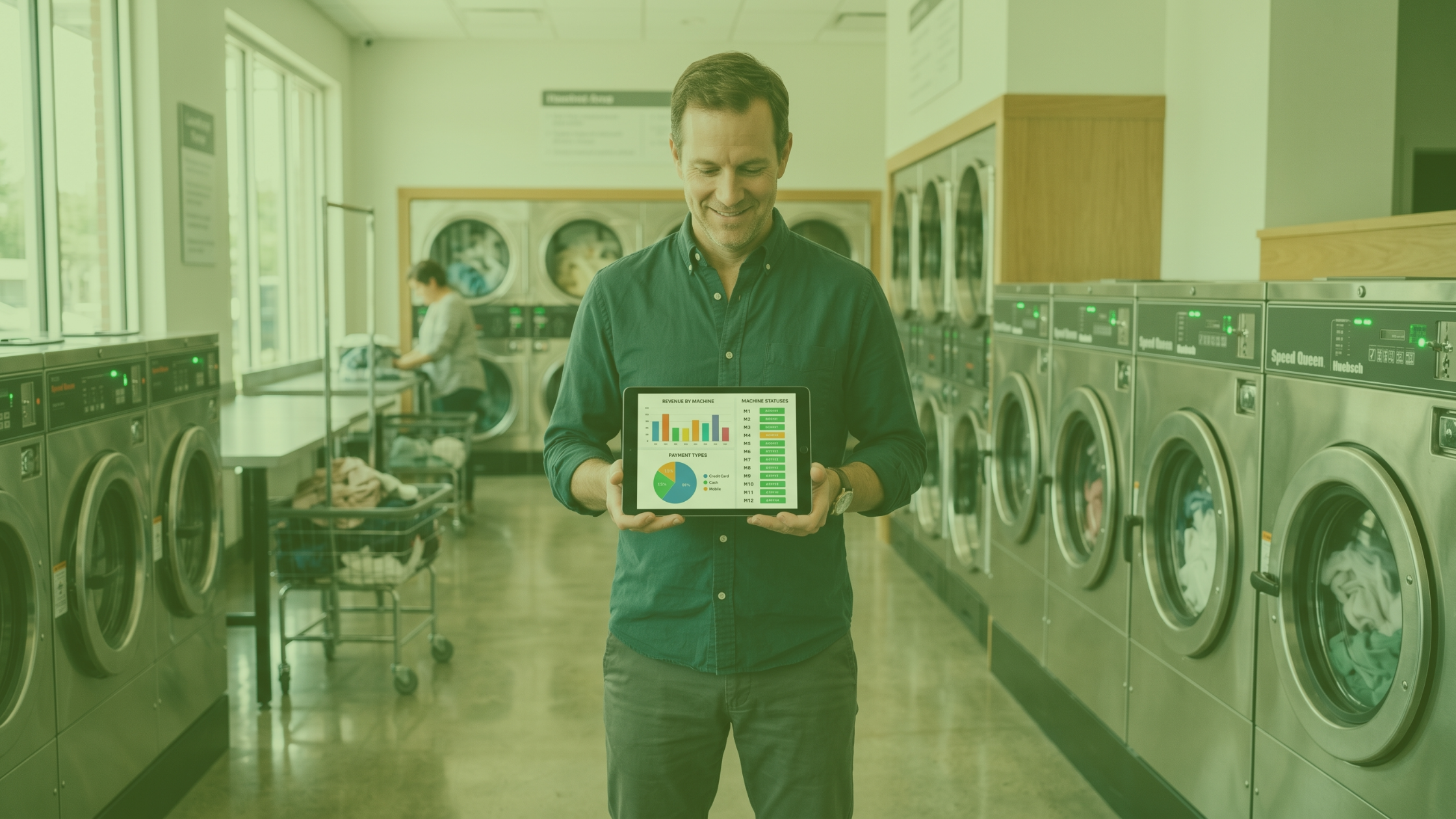
Once the system is live, use the data. Track which machines see the most card usage, monitor peak hours, test pricing adjustments, and evaluate whether promotional pricing during slow periods drives additional traffic. The management dashboard that comes with most modern card systems is one of the most valuable tools a laundromat owner can have.
Card vs. Coin: What the Numbers Actually Show
The comparison between card and coin operations comes down to measurable differences across revenue, cost, security, and customer experience.
Revenue per visit increases when customers pay by card. Research consistently shows that consumers spend more with card payments than with cash. A Forbes study found that 58% of consumers believe they spend more when using cards. In a laundromat context, that translates to customers choosing larger machines, adding extra cycles, or opting for premium wash options they might skip if limited to the quarters in their pocket.
Pricing flexibility is one of the most underappreciated advantages. Coin-only machines lock you into $0.25 increments. Card systems let you price a wash at $4.75 or $5.25, capturing revenue that would otherwise be lost to rounding. Over thousands of cycles per month, those increments add up significantly.
Operating costs shift in your favor. Coin collection, counting, transportation, and banking consume labor hours and create security risks. Card systems eliminate most of that overhead. The processing fees (3% to 5%) are more than offset by the revenue gains and labor savings in most operations.
Security improves measurably. Less cash on site means fewer break-ins, less vandalism to coin boxes, and reduced risk of internal theft. Digital transaction records also simplify accounting, reduce errors, and make tax reporting cleaner.
Customer satisfaction drives long-term value. According to a National Laundry Equipment comparison guide, modern payment systems that combine easy tap-to-pay with loyalty rewards and cycle notifications create a measurably better customer experience. In competitive markets, that experience determines whether a customer returns or drives to the next store.

Top 5 Reasons to Make Your Laundromat Card Operated
Making the case for card payment comes down to five core advantages that affect your bottom line and your daily operations.
Higher revenue per machine. Card-paying customers spend more per visit, and flexible pricing lets you capture revenue that quarter-based increments leave on the table. Operators consistently report 17% to 22% revenue increases after adding card payment.
Lower operational overhead. Eliminating or reducing coin handling saves hours of labor every week. No more counting, rolling, transporting, and depositing coins. No more coin jams causing machine downtime.
Stronger security. Less cash on the premises reduces break-in risk, vandalism, and internal shrinkage. Every transaction is recorded digitally, creating an audit trail that simplifies accounting.
Actionable business data. Card systems track every transaction in real time. You know which machines are most profitable, when your peak hours are, and how customers respond to pricing changes, all from your phone or laptop.
Competitive positioning. In markets where neighboring laundromats have already gone cashless, a coin-only store looks outdated. Younger customers, in particular, expect card and mobile payment as a baseline, and they will choose the store that offers it.
Conclusion
A card operated laundromat is no longer an upgrade. It is the direction the entire industry is moving, and the operators who make the transition thoughtfully position themselves for stronger revenue, lower costs, and a better customer experience for years to come. The conversion does not require replacing your equipment. Retrofit card readers install on most commercial washers and dryers in minutes, and the investment typically pays for itself within a few months.
Real Clean Group works with laundromat owners throughout Colorado and Wyoming to evaluate payment systems, install card readers alongside equipment service and maintenance, and optimize operations for long-term profitability. With more than 500 projects completed and over half a century of combined industry expertise, RCG is the full-service partner that helps you modernize without the guesswork.
Ready to explore card payment for your laundromat? Request a free consultation and get a clear picture of what the conversion looks like for your specific operation. For more on building a strong operational foundation, explore our guide to reducing machine downtime and our overview of monthly laundromat operating costs.