Table of Contents
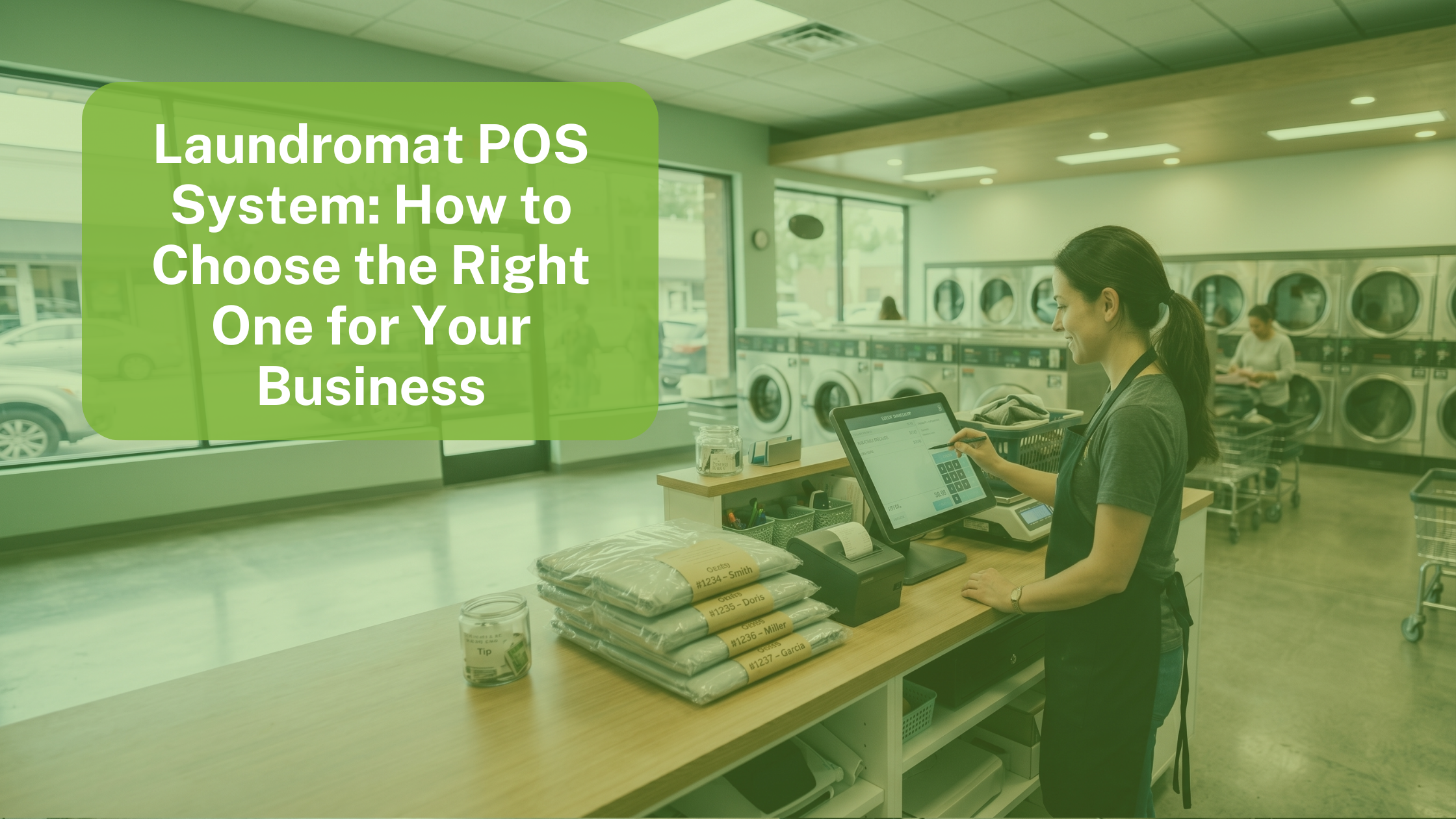
A laundromat POS system does more than ring up sales. It tracks orders from drop-off to pickup, manages weight-based pricing, monitors employee activity, and gives you the data to make smarter decisions about your operation every day. Whether you run a self-service store with a growing wash-and-fold counter, a full-service laundromat with delivery, or a multi-location business, the right POS system becomes the operational backbone that connects payment processing, customer management, and business reporting in one place. Real Clean Group helps laundromat owners across Colorado and Wyoming select and integrate POS systems alongside equipment, service, and full-facility planning. The goal is always the same: a system that fits your operation today and scales as your business grows.
TL;DR:
A laundromat POS system is specialized software built for laundry-specific workflows like wash-and-fold order tracking, weight-based billing, delivery management, and machine-level reporting. Generic retail POS systems can handle basic transactions but lack the features that drive revenue growth in a laundromat, including loyalty programs, per-pound pricing, garment tracking, and integrated pickup and delivery. Laundry-specific POS pricing typically ranges from $99 to $330 per month, with hardware packages adding a one-time cost for commercial-grade terminals, scales, and printers. The investment pays for itself through higher average order values, reduced billing errors, better customer retention, and the ability to add high-margin services like wash-and-fold and delivery that can increase total revenue by 20% to 40%.
Key Points:
Laundry-specific POS outperforms generic systems: Generic platforms like Square handle basic payments but lack wash-and-fold workflows, per-pound pricing, garment tracking, and laundry-specific reporting that purpose-built systems provide.
Monthly costs are manageable: Laundry POS subscriptions typically range from $99 to $330 per month depending on features, with hardware packages as a one-time investment for commercial-grade terminals, scales, label printers, and cash drawers.
Wash-and-fold is a revenue multiplier: Adding wash-and-fold service through a POS system can increase total laundromat revenue by 20% to 40%, according to industry data, because it opens a high-margin service line with minimal additional equipment.
Data visibility changes decision-making: A good POS tracks revenue by service type, peak hours, employee productivity, and customer retention, giving you the information to optimize pricing, staffing, and marketing.
Pickup and delivery integration is standard: Most laundry-specific POS platforms now offer built-in delivery management or third-party integrations with services like DoorDash, making it possible to add delivery without building your own logistics.
Employee tracking reduces shrinkage: POS systems with time clocks, machine-start tracking, and per-employee sales reports help identify productivity issues and prevent revenue loss from billing errors or theft.
Loyalty programs drive repeat business: Automated loyalty points, referral programs, and targeted SMS or email campaigns through the POS keep customers engaged and increase lifetime value.
Hardware matters in a laundromat environment: Consumer-grade tablets fail in high-volume, humid laundry environments. Commercial-grade POS terminals with integrated scales and thermal printers are built for the conditions.
For guidance on selecting the right POS system for your laundromat, connect with Real Clean Group for a free consultation.
“The POS system is where self-service revenue and full-service revenue come together in one view. Owners who can see both sides of their business in real time make better equipment, staffing, and pricing decisions.”
What a Laundromat POS System Actually Does
A laundromat POS system is purpose-built software that manages the specific workflows of a laundry business. Unlike a retail POS that processes item-based transactions, a laundry POS handles weight-based billing, order lifecycle tracking, machine assignments, and service-type management across self-service, wash-and-fold, dry cleaning, and delivery operations.
According to Merchant Maverick's review of laundromat POS systems, the leading platforms in this space go well beyond payment processing. They include customer relationship management, employee time tracking, inventory monitoring for supplies like detergent and laundry bags, commercial invoicing for business accounts, and integrated pickup and delivery logistics. Some systems even connect with third-party delivery services, allowing laundromat owners to offer delivery through platforms like DoorDash without building their own driver network.
For laundromat owners in Colorado and Wyoming, a POS system also provides the remote management tools that make it possible to monitor operations from anywhere. Real Clean Group works with owners running stores in Denver, Fort Collins, Cheyenne, and smaller mountain communities, and the ability to check sales, adjust pricing, and review employee activity remotely is consistently one of the features operators value most.
The practical difference between a laundromat with a POS system and one without is the difference between managing by data and managing by guesswork. Every transaction, every order, and every customer interaction becomes a data point you can use to improve your business.
Why Generic POS Systems Fall Short
Generic POS platforms like Square and Clover are excellent tools for retail businesses. However, they are not designed for the way laundromats operate, and that gap becomes expensive over time.
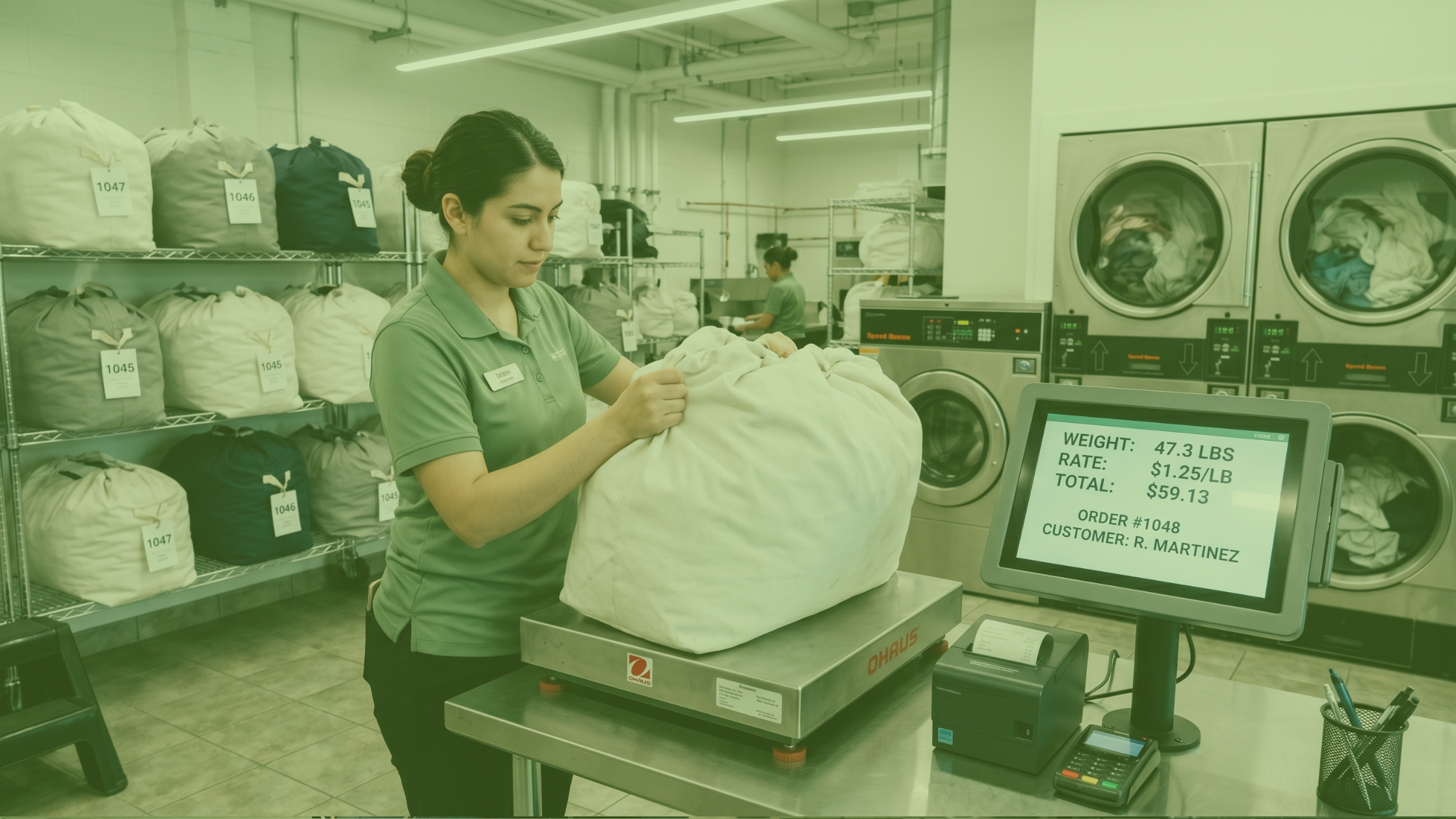
A laundromat is not a retail store. You are not selling individual items at fixed prices. You are managing weight-based services (wash-and-fold charged per pound), time-based services (self-service machine cycles), recurring commercial accounts (hotels, salons, gyms billed on terms), and potentially a delivery operation with route logistics. A generic POS cannot natively handle per-pound pricing, order lifecycle tracking from drop-off to pickup, garment-level sorting, or machine assignment workflows.
According to a comparison from Wash-Dry-Fold POS, generic systems force laundromat owners into workarounds. For example, using Square for wash-and-fold means programming a retail item like "Basic Laundry" and selling it by quantity to represent pounds. That approach works technically but loses the workflow advantages, reporting granularity, and customer communication features that a laundry-specific system provides.
The other gap is hardware. Consumer-grade tablets and card readers are not built for the humidity, lint, and high-traffic conditions of a working laundromat. Laundry-specific POS vendors offer commercial-grade terminals with integrated scales, thermal printers, and label printers designed for the environment.
For a store that only offers self-service with no wash-and-fold counter, a generic POS combined with a card payment system on each machine may be sufficient. However, any laundromat offering drop-off services, commercial accounts, or delivery will outgrow a generic system quickly.
Core Features to Look For
When evaluating a laundromat POS system, focus on the features that directly affect revenue, efficiency, and customer retention.
Order Management and Workflow
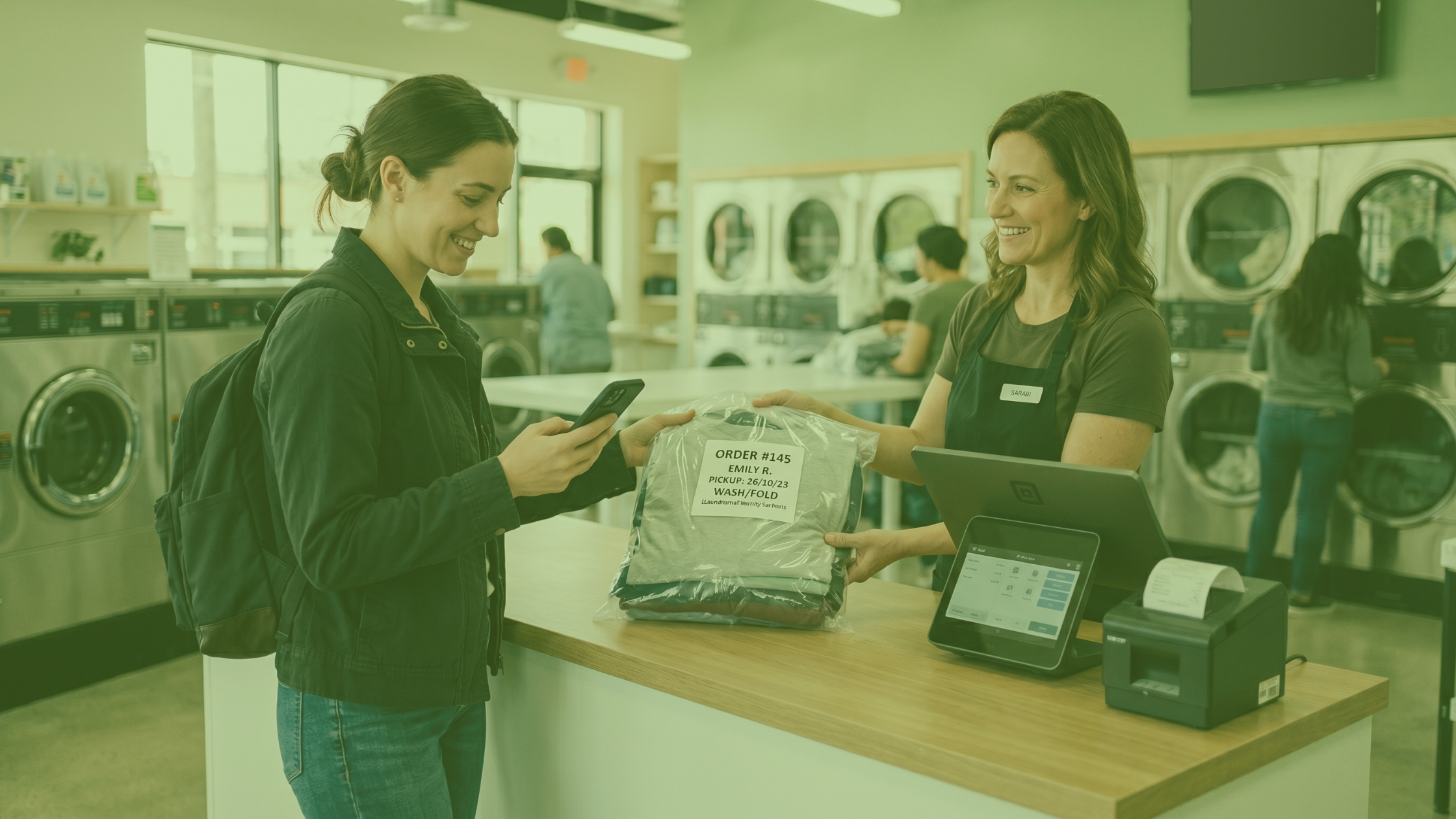
The POS should track every order from intake to completion. For wash-and-fold, that means logging the customer, recording weight, assigning machines, tracking progress, and notifying the customer when the order is ready for pickup. For laundromats offering commercial accounts, look for invoicing, custom price tiers, and on-account billing capabilities.
Payment Processing
Accept every payment type: cash, credit, debit, contactless tap, and mobile wallets. Some laundry POS platforms include integrated payment processing at competitive rates, while others connect with third-party processors like Stripe or PayPal. Compare processing rates carefully, as even a 0.5% difference compounds significantly across thousands of monthly transactions.
Customer Data and Loyalty
A POS that captures customer information, including contact details, order history, and preferences, enables targeted marketing and retention programs. The best systems automate loyalty rewards, send SMS or email notifications when orders are complete, and offer referral incentives. According to industry reporting, laundromat owners using POS-driven loyalty and marketing features report 20% to 30% revenue growth in their first year with the system.
Employee Management
Time clock functionality, per-employee sales tracking, and machine-start attribution help you manage labor costs and identify productivity issues. Some systems also track the ratio of machine starts to order values per employee, which helps detect billing errors or theft.
Reporting and Analytics
Real-time dashboards showing revenue by service type, peak hours, machine utilization, and customer trends give you the data to make informed decisions about pricing, staffing, and equipment. Cloud-based reporting accessible from any device is essential for owners who do not spend every day in the store.
Pickup and Delivery
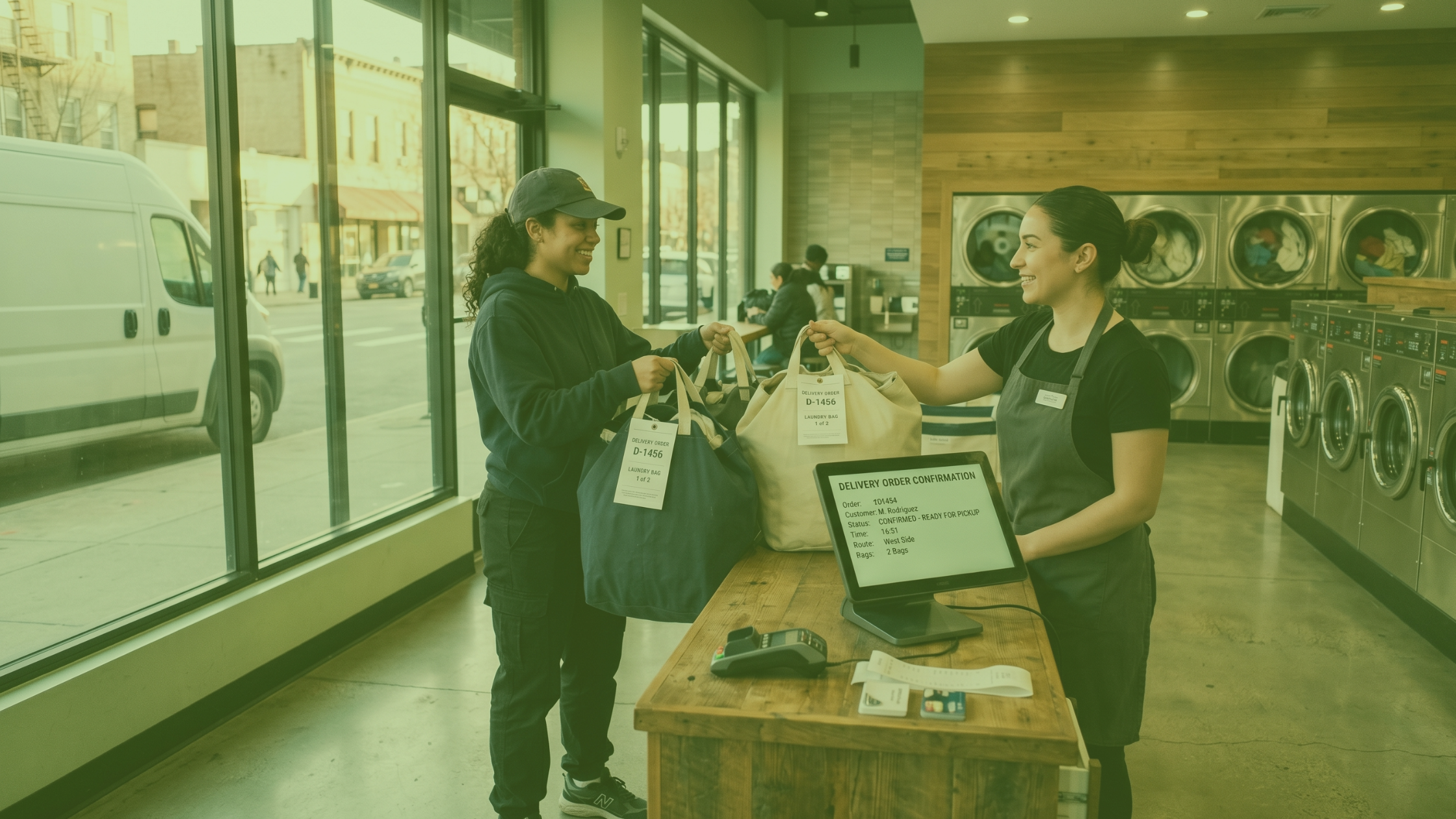
If you offer or plan to offer delivery, choose a POS with built-in route management or native integration with DoorDash, Uber, or similar platforms. According to Merchant Maverick, platforms like Cents and Curbside Laundries have made delivery integration a core feature, reducing the operational complexity of adding this service.

What a Laundromat POS System Costs
POS costs break down into three categories: software subscriptions, hardware, and payment processing fees.
Software Subscriptions
According to reviews from Merchant Maverick, laundry-specific POS subscriptions typically range from $99 to $330 per month. Entry-level plans cover basic payment processing, order management, and employee time clocks. Higher-tier plans add features like delivery driver apps, advanced reporting, commercial invoicing, subscriptions, and multi-location management. Annual prepayment often reduces the monthly cost by 10% to 15%.
Generic alternatives like Square start free for basic functionality and scale to $60 to $90 per month for paid plans, but they lack laundry-specific features.
Hardware
Laundry-specific POS hardware packages typically include a commercial-grade touchscreen terminal, integrated weight scale, thermal receipt printer, label printer for laundry bags, and a cash drawer. Expect to invest $1,500 to $4,000 for a complete hardware setup. This is a one-time cost, and commercial-grade hardware is built to last in the demanding conditions of a working laundromat.
Payment Processing
Processing fees typically range from 2.5% to 3.5% per transaction for laundry-specific POS platforms. Some vendors include payment processing in their subscription at competitive rates, while others allow you to use a third-party processor. Compare the total cost of ownership, including subscription, processing fees, and hardware, rather than evaluating any single cost in isolation.
Total First-Year Investment
For a single-location laundromat, expect a first-year total cost of $3,000 to $8,000 including hardware, subscription, and setup. That investment is modest relative to the revenue gains from adding structured wash-and-fold services, improving customer retention through loyalty programs, and reducing billing errors.
How a POS System Grows Your Revenue
A laundromat POS system is not just an expense. It is the tool that enables revenue growth across multiple service lines.
Enabling Wash-and-Fold Services
Wash-and-fold is the single biggest revenue opportunity for most laundromats, and a POS system is what makes it operationally viable at scale. According to industry data, self-service operations generate 65% to 75% of total laundromat revenue, while full-service models including wash-and-fold and delivery capture 25% to 35%. Adding wash-and-fold can increase total revenue by 20% to 40% with minimal additional equipment, since you are using the same machines you already own. The POS provides the order management, billing, and customer communication that make the service work smoothly.
Reducing Revenue Leakage
Manual billing, handwritten orders, and spreadsheet tracking create errors that quietly drain profit. A POS system eliminates most of these errors by automating weight-based pricing, generating accurate invoices, and recording every transaction digitally. Even a 2% to 3% reduction in billing errors translates to meaningful savings over the course of a year.
Increasing Average Order Value
POS systems make it easy to offer add-on services like stain treatment, fabric softener upgrades, or express turnaround at checkout. Structured upselling at the point of sale increases average order value without adding operational complexity. Combined with smart equipment choices, the right POS strategy maximizes revenue from every customer interaction.
Retaining Customers
Loyalty programs, automated order notifications, and referral incentives all run through the POS. Retention is cheaper than acquisition, and the data from a POS system makes retention predictable. You know who your best customers are, how often they visit, and what services they use, so you can tailor communications and promotions accordingly.
Generic POS systems miss these features. A retail POS can process payments, but it cannot track per-pound orders, assign machines to attendants, or notify customers when their laundry is ready.
Top 5 Features Every Laundromat POS Needs
Choosing a POS system comes down to five non-negotiable capabilities that separate laundry-specific platforms from generic alternatives.
Weight-based and per-pound billing. If you offer wash-and-fold, this is essential. The system should connect to a commercial scale, automatically calculate pricing based on weight, and apply different rate tiers for residential versus commercial accounts.
Order lifecycle tracking. Every order should be visible from intake through washing, drying, folding, and customer pickup or delivery. This prevents mix-ups, enables status notifications, and creates accountability at every step.
Integrated payment processing. Accept cash, credit, debit, contactless, and mobile payments through one system. Compare processing rates across vendors, and prioritize platforms that offer transparent, competitive pricing without hidden fees.
Customer data and automated marketing. Capture contact information, track order history, and automate loyalty rewards and communications. A POS without CRM functionality is a billing tool. A POS with CRM is a growth engine.
Cloud-based reporting and remote access. You should be able to check revenue, monitor employee activity, and review business performance from your phone or laptop. Cloud-based access is especially important for owners managing multiple locations or running their laundromat alongside another business.
Conclusion
A laundromat POS system is the operational foundation that connects payment processing, order management, customer retention, and business analytics in one platform. The right system enables wash-and-fold services, supports delivery logistics, reduces billing errors, and provides the data you need to make confident decisions about pricing, staffing, and growth. Generic POS platforms can handle basic transactions, but laundry-specific systems are built for the workflows, environments, and revenue opportunities that define a modern laundromat business.
Real Clean Group partners with laundromat owners across Colorado and Wyoming to build operations that are efficient, profitable, and built to grow. From equipment selection and installation to service, maintenance, and technology integration, RCG provides the full-service support that helps your laundromat reach its potential. With more than 500 projects completed and a 99% uptime guarantee, Real Clean Group is the partner that brings it all together.
Ready to find the right POS system for your laundromat? Request a free consultation and get expert guidance on the system, equipment, and operational strategy that fits your business. You can also explore how choosing the right commercial washing machine and maximizing your equipment ROI work together with POS technology to build a stronger operation.