Wash and Fold Laundry Service: The Complete Guide for Laundromat Owners
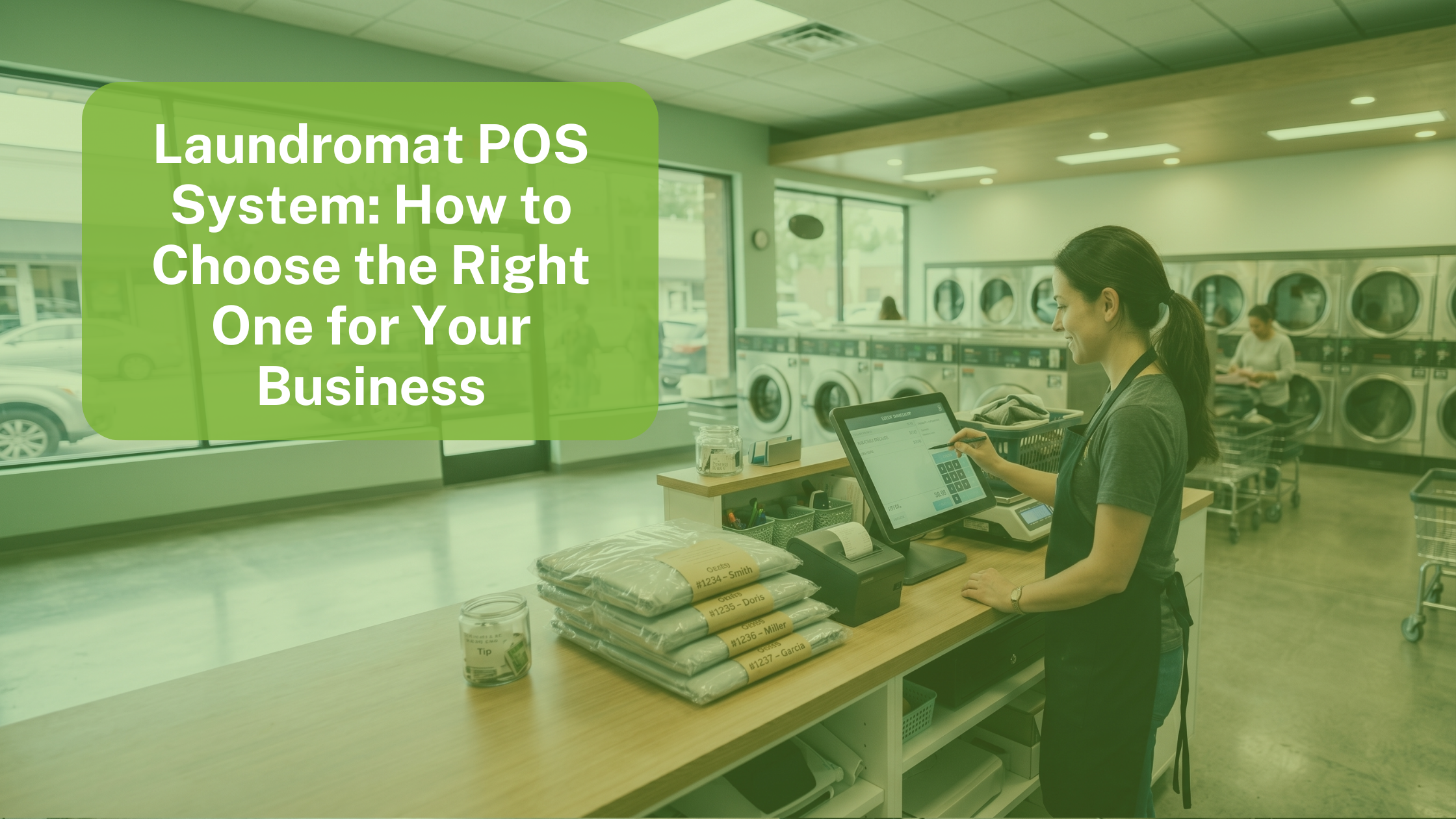
Table of Contents
Wash and fold laundry service is the most accessible high-margin revenue stream available to laundromat owners, and most stores that offer it see a meaningful lift in total revenue without adding a single new machine. The model is straightforward: a customer drops off a bag of laundry, your staff washes, dries, and folds it, and the customer picks it up ready to put away. However, making that service profitable at scale requires the right equipment, a clear operational workflow, and pricing that reflects your actual costs. Real Clean Group works with laundromat owners across Colorado and Wyoming to build wash-and-fold programs that run efficiently from day one, supported by the right commercial laundry equipment and a maintenance plan that keeps machines running through higher daily cycle counts.
TL;DR:
Adding wash and fold service to an existing laundromat can increase total revenue by 20% to 40%, according to industry data, because it opens a full-service revenue line using equipment you already own. Pricing is typically based on weight, ranging from $1.25 to $2.50 per pound depending on your market and turnaround time. The keys to profitability are accurate weight-based billing, controlled labor costs, a 24-hour turnaround standard that customers trust, and the right commercial equipment to handle higher cycle counts without increasing downtime. Pickup and delivery extends the model further, adding customers who never set foot in your store.
Key Points:
Revenue lift is real and measurable. Industry data shows laundromats adding full-service wash and fold typically increase total revenue by 20% to 40%, using the same machines already serving self-service customers.
Pricing by the pound is the standard model. Most operators charge between $1.25 and $2.50 per pound, with premium tiers for express turnaround, specialty items, or commercial accounts.
Labor is your biggest cost lever. Unlike self-service, wash and fold requires staffed hours. Controlling the ratio of labor cost to order value is what separates profitable programs from ones that break even.
Equipment capacity must match the added volume. Machines running more daily cycles need more frequent maintenance. High-extract washers that reduce drying time are especially valuable in a WDF operation.
Turnaround time builds customer loyalty. A consistent 24-hour standard turns first-time customers into weekly regulars. Reliability matters more than speed for most customers.
Pickup and delivery multiplies your reach. Adding delivery turns your laundromat into a service that reaches customers who may never visit in person, often at a 15% to 25% price premium over in-store rates.
Commercial accounts are the high-value anchor. Salons, gyms, Airbnbs, small hotels, and veterinary clinics need regular laundry service on terms. These accounts generate predictable weekly revenue with high order weights.
A POS system makes the service operationally viable. Tracking orders from drop-off to pickup, managing weight-based billing, and sending customer notifications all require purpose-built software. A generic cash register will not scale.
Connect with Real Clean Group for a free consultation on building a wash-and-fold program that fits your equipment, your staff, and your market.
“The biggest mistake we see is stores that launch wash and fold without tracking labor per pound. Within a few months, they know the revenue number but not the cost number. You need both to know whether the program is actually working.”
Why Wash and Fold Service Works for Laundromats
Self-service laundry has a ceiling. Each machine can only run so many cycles per day, and vend pricing moves slowly. Wash and fold removes that ceiling by adding a revenue layer that scales with customer demand rather than machine count.
The economics favor it. According to the Coin Laundry Association, full-service models including wash-and-fold and pickup and delivery now account for 25% to 35% of total laundromat revenue in many urban and suburban markets. For stores that have not added the service, that share represents revenue they are not capturing. The machines, the utilities, and the lease are already paid. Each pound of wash-and-fold processed through existing equipment is high-margin work.
The customer value proposition is also clear. Consumers who use wash-and-fold services are paying for time, not just clean laundry. They are busy professionals, families with young children, or renters without in-unit machines who have decided that laundry is not how they want to spend their weekend. That willingness to pay a premium is durable and relatively price-insensitive compared to self-service customers.
For Colorado laundromat owners, the market conditions are favorable. Urbanization along the Front Range, a growing renter population in cities like Denver, Fort Collins, and Colorado Springs, and a culture that values convenience services all create steady demand for full-service laundry. Real Clean Group has helped dozens of Colorado operators launch wash-and-fold programs by pairing the right equipment with the operational structure to run the service profitably.
How to Price Wash and Fold Service
Pricing determines whether your wash-and-fold program is a profit center or a break-even burden. Most operators undercharge when they start, because they focus on being competitive rather than being profitable.
Set a Base Rate Per Pound
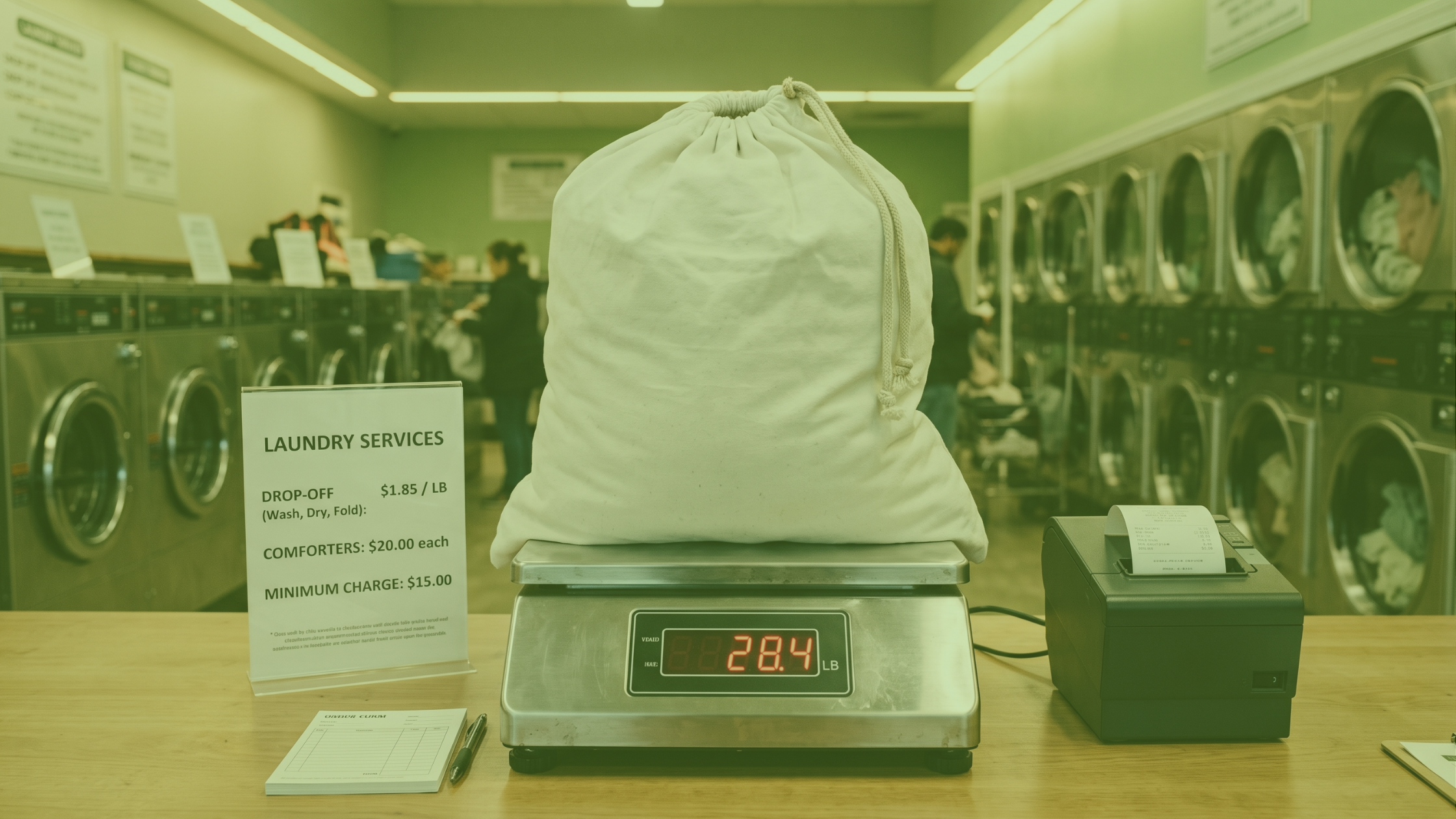
The standard pricing model charges by weight at intake. Rates across the industry range from $1.25 to $2.50 per pound, with most operators in mid-sized markets landing between $1.50 and $1.75 per pound for standard service. In higher-cost markets, or for operators offering premium folding, packaging, or sorting, rates push toward $2.00 and above. According to American Laundry News, pricing in urban markets has risen steadily as demand for convenience services grows.
Set your minimum order weight at 10 to 15 pounds. Orders below that threshold are inefficient to process because the labor cost per pound spikes on small bags.
Build In Premium Tiers
A flat per-pound rate leaves revenue on the table. Add premium tiers that customers choose willingly. Express turnaround (same-day or 4-hour service) typically commands a 25% to 50% surcharge. Specialty handling for delicates, activewear, or oversized items justifies a higher per-pound rate. Delivery adds a fee on top of the service rate, usually $5 to $15 depending on distance.
Account for Your True Costs
Labor is the primary cost in wash-and-fold, typically running 25% to 35% of revenue for a well-managed operation. Water, detergent, packaging materials (bags, labels, tissue paper), and incremental utility costs add another 10% to 15%. Your target gross margin should be 50% or higher before overhead. If your pricing does not support that margin, raise it. Most customers will not leave over a $0.25 per-pound increase, especially if your service is reliable.
Equipment and Operational Requirements
Wash and fold puts more daily cycles on your machines. Before launching the service, confirm that your equipment and your workflow can handle the additional volume without pushing machines past their maintenance schedule.
Equipment Capacity and Cycle Load
A self-service laundromat runs each machine through a customer-driven cycle schedule. Wash-and-fold adds a staffed production layer that can fill machines consistently throughout the day. For a store processing 200 pounds of wash-and-fold per day across an 8-hour shift, that is roughly 5 to 7 additional washer cycles depending on machine capacity.
High-extract commercial washers (200 G-force or higher) are especially valuable in a wash-and-fold operation. According to Alliance Laundry Systems, high-extract spin cycles remove significantly more moisture from fabrics than standard machines, reducing drying time by up to 30%. Shorter drying time means more throughput, lower gas or electricity costs per pound processed, and faster turnaround for customers.
Real Clean Group recommends evaluating your current machine mix before scaling wash-and-fold volume. Older machines with lower extract speeds create bottlenecks at the dryer stage that limit throughput and increase energy costs. An equipment assessment through RCG's service and maintenance program identifies which machines are well-suited for production volume and which are approaching replacement.
Operational Workflow
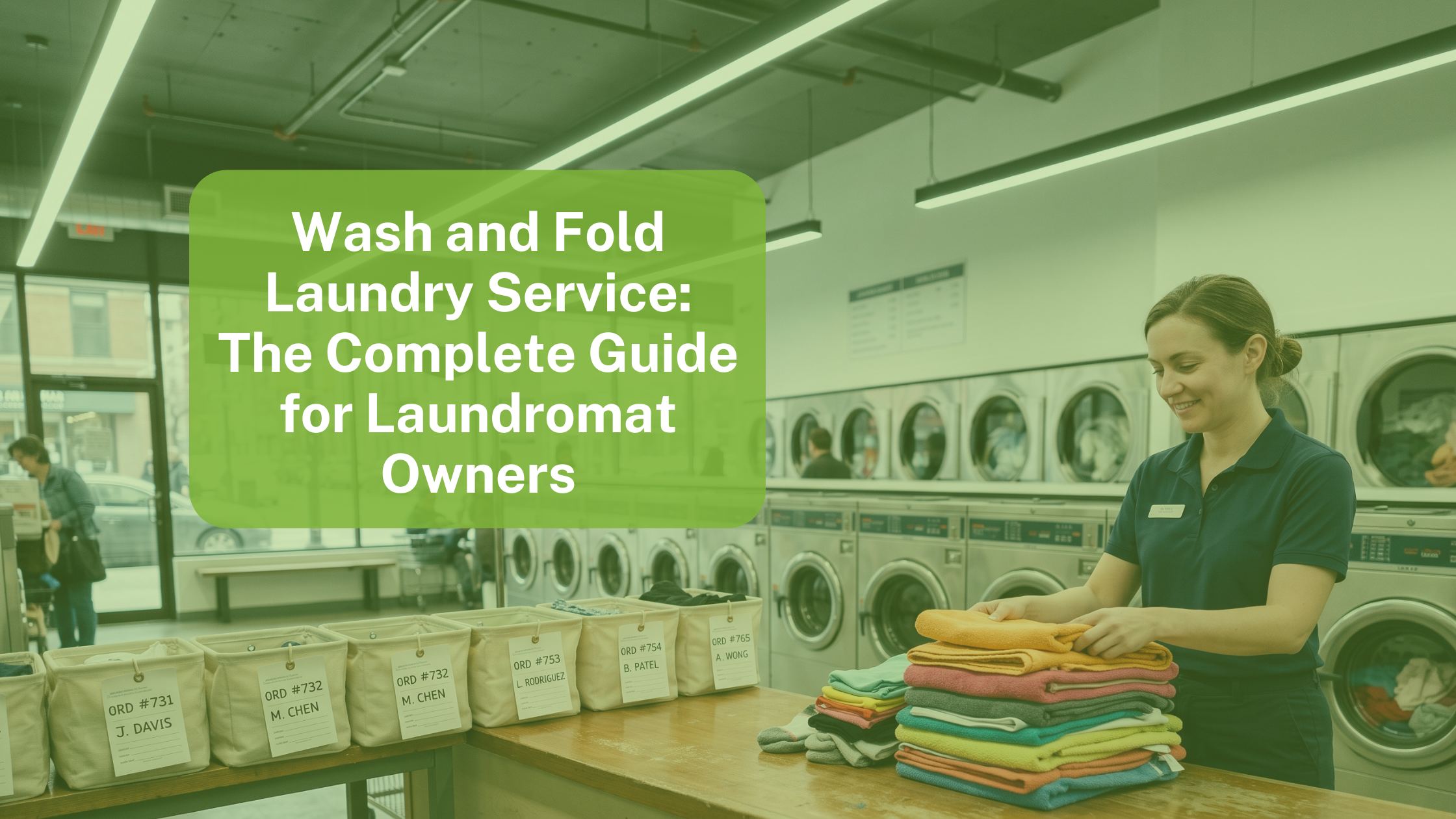
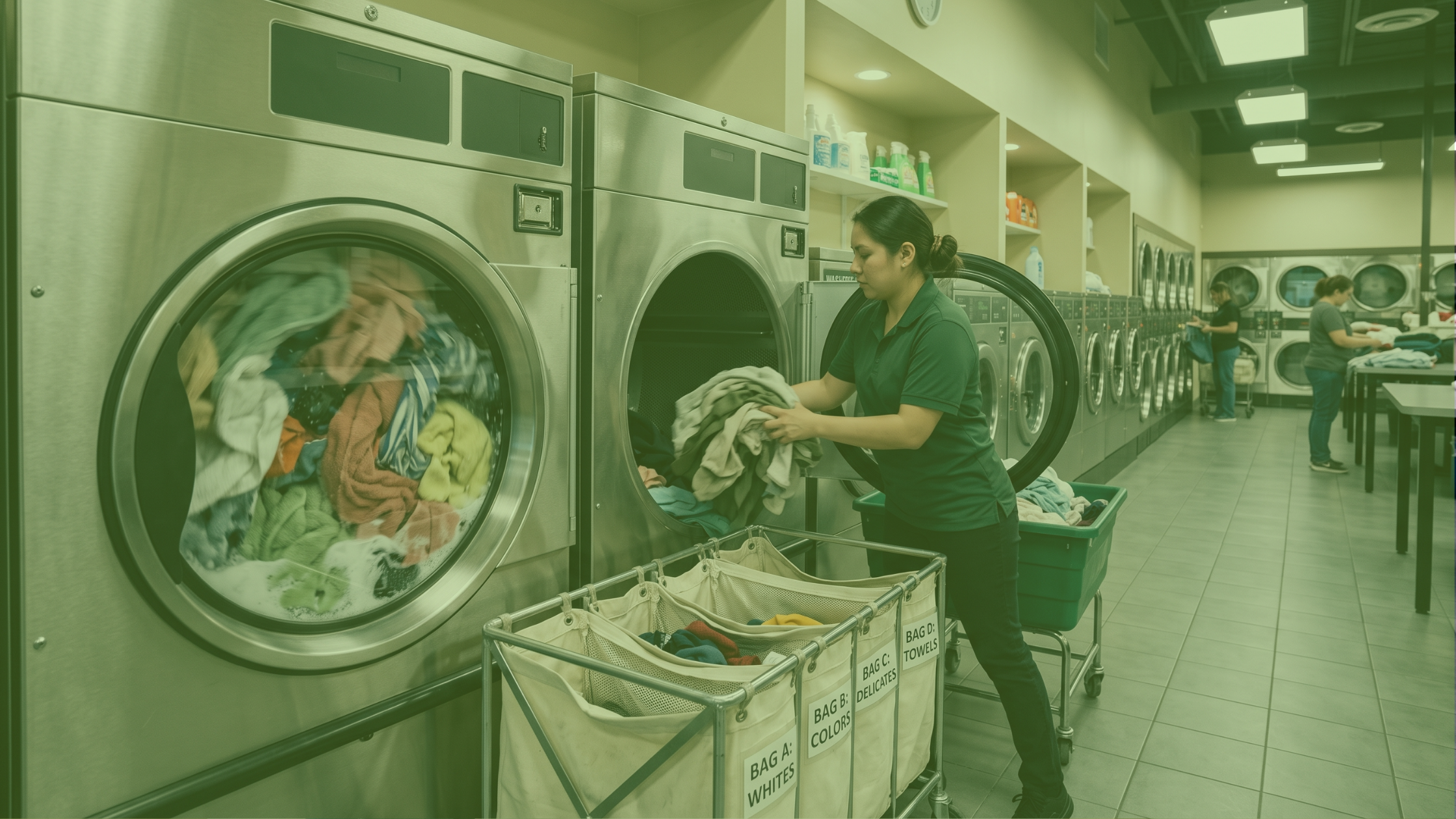
The workflow that keeps wash-and-fold profitable is simple but must be followed consistently. At intake, weigh the bag, log the customer and order number, attach a label, and collect payment or card authorization. Assign a machine, run the cycle, transfer to dryer, fold and package, and notify the customer. Every step requires a paper or digital record to prevent mix-ups.
A POS system built for laundry operations, as covered in our guide to laundromat POS systems, handles weight-based billing, order tracking, customer notifications, and employee accountability in one platform. For stores processing more than 50 orders per week, a purpose-built POS is not optional.
Staffing
One trained attendant can typically process 100 to 150 pounds of wash-and-fold per shift efficiently. As volume grows, staffing scales. The important discipline is tracking labor cost per pound processed and adjusting staffing to match actual order volume rather than scheduled hours.
Adding Pickup and Delivery
Pickup and delivery extends your wash-and-fold reach beyond the customers who walk through your door. It is also the service tier that attracts the highest-value customers, those who are time-constrained enough to pay a premium for the full convenience experience.
The Basic Model
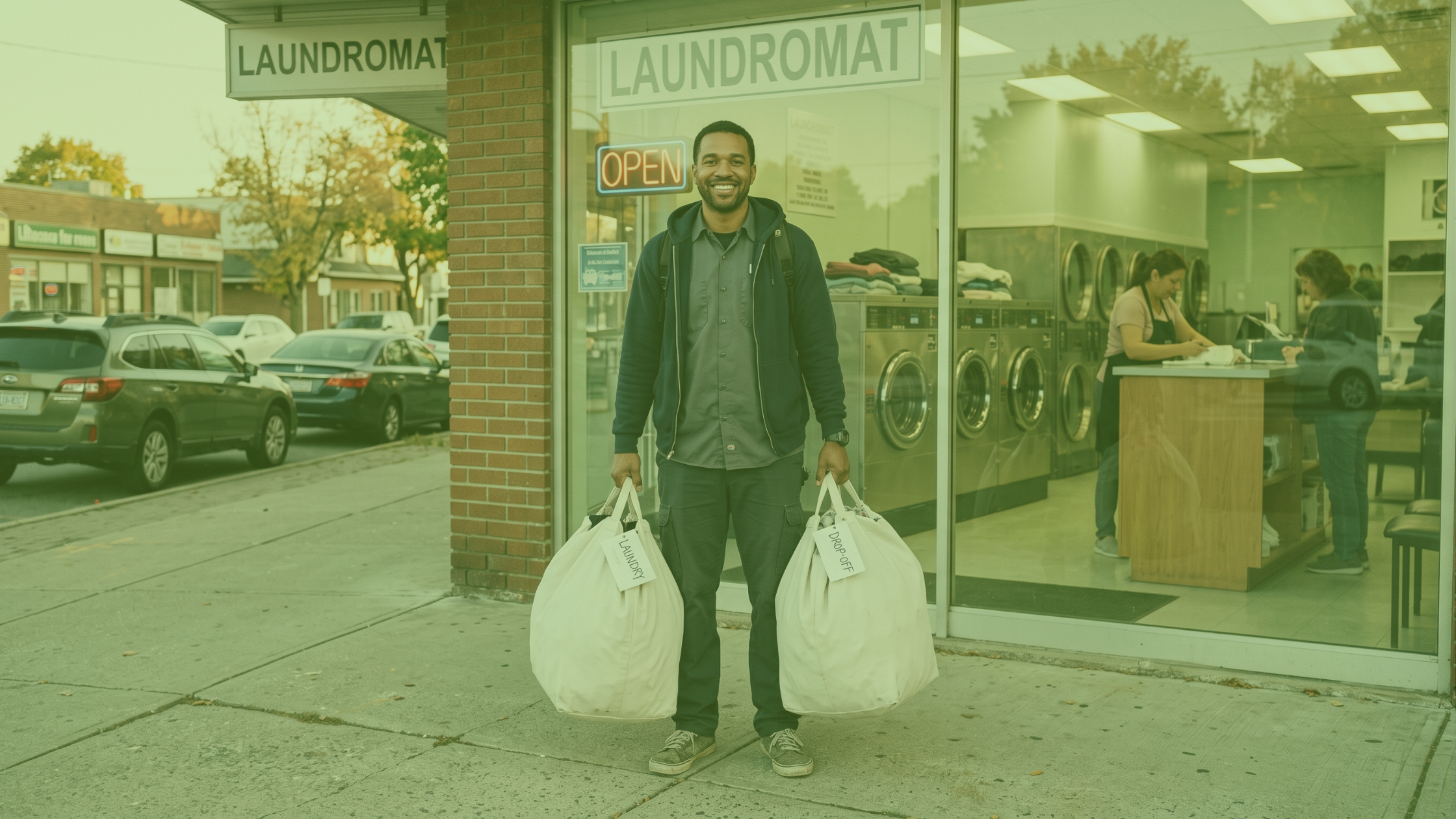
In its simplest form, pickup and delivery requires a driver (or owner), a vehicle, and a scheduling system. Customers book a pickup window online or by phone, the driver collects their laundry, returns it to the store for processing, and delivers the finished order. Most operators charge a flat delivery fee of $5 to $15 per order, applied on top of the standard per-pound rate.
According to TRSA, the textile rental and commercial laundry industry has seen pickup and delivery demand accelerate as consumers increasingly expect on-demand service across all categories. Laundromats that add delivery are capturing a customer segment that would otherwise use app-based laundry services.
Integrating Delivery With Your POS
Modern laundry POS platforms like Cents and Curbside Laundries include native route management and third-party delivery integrations with services like DoorDash. For stores not ready to manage their own driver, these integrations make it possible to offer delivery without hiring additional staff or managing vehicle logistics. The platform handles scheduling, customer communication, and order handoff.
Pricing Delivery Appropriately
Delivery pricing must account for driver time, fuel, and vehicle costs. For owner-operated delivery within a 5-mile radius, a $10 flat fee is a reasonable starting point. For contracted drivers or third-party delivery, factor the platform commission (typically 15% to 25% per order) into your service pricing before you launch.
Landing Commercial Accounts
Commercial accounts transform wash-and-fold from a consumer service into a B2B revenue stream. A single commercial account, such as a 20-room boutique hotel, a busy salon, or a veterinary clinic, can generate 50 to 200 pounds of laundry per week on a reliable schedule. That predictability is worth more than its equivalent in walk-in volume.
Target Customer Types
The best commercial accounts for laundromats share two characteristics: they generate consistent laundry volume, and they need a reliable local partner because outsourcing to a commercial linen service is either too expensive or too slow. Ideal targets in Colorado and Wyoming include:
Boutique hotels and vacation rentals: Sheets, towels, and linens on a fixed weekly or bi-weekly cycle. Real Clean Group has helped hotel operators understand when in-house laundry makes sense versus outsourcing, and many smaller properties fall in between, using a combination of both.
Salons and spas: Towels, capes, and robes processed weekly. Volume is predictable and order contents are consistent, making processing fast.
Fitness studios and gyms: Towel service accounts generate regular volume with minimal sorting complexity.
Veterinary clinics and groomers: Blankets, towels, and surgical drapes on a regular cycle. These accounts often prefer a local partner over a commercial linen service due to turnaround time.
Short-term rental operators: Airbnb and VRBO hosts in mountain resort markets need fast turnaround between guest stays.
Structuring Commercial Accounts
Offer commercial customers a contract rate, typically 10% to 20% below your retail per-pound rate, in exchange for a minimum weekly volume commitment. Bill on net-15 or net-30 terms using your POS system's invoicing feature. These accounts are lower per-pound margin but carry zero marketing cost after the initial sale and generate highly predictable cash flow.
Same machines, more revenue. Wash and fold processes through your existing washers and dryers. The equipment cost is already paid. Each pound of full-service laundry is incremental margin.
Top 5 Mistakes Laundromat Owners Make When Starting Wash and Fold
Adding full-service laundry is straightforward in concept. However, most operators who struggle with the service make one of these five avoidable errors.
Underpricing at launch. Setting a low introductory rate to attract customers is tempting, but it trains customers to expect a price that does not cover your labor costs. Price correctly from day one. The customers who choose wash-and-fold are buying convenience, not a discount.
Skipping the POS system. Managing orders with a notebook and a cash register works for the first 10 orders per week. Beyond that, mix-ups increase, billing errors erode margin, and you lose the customer data needed to build loyalty programs and commercial accounts.
Ignoring machine maintenance. Higher daily cycle counts accelerate wear on washers and dryers. A machine that breaks down during peak production hours creates delayed orders and unhappy customers. Build a proactive maintenance schedule before you scale volume.
Setting no minimum order weight. Processing a 5-pound bag takes nearly the same labor as a 15-pound bag. Without a minimum, small orders consume disproportionate staff time and reduce your effective per-pound rate.
Treating commercial accounts like walk-in customers. Commercial accounts need invoicing, consistent pickup scheduling, and a dedicated point of contact. Managing them through the same intake process as walk-in customers creates friction that causes churn.
Conclusion
Wash and fold laundry service is the most direct path to increased revenue for most laundromat operators, because it monetizes existing capacity through a service model that customers are willing to pay a premium for. The operational requirements are manageable. The margin, when priced correctly, is strong. The path to commercial accounts is straightforward for operators who understand what local businesses actually need. And the addition of pickup and delivery extends that reach to customers who will never walk through your door.
Real Clean Group has helped laundromat owners across Colorado and Wyoming build wash-and-fold programs that work, from selecting and maintaining the right commercial equipment to structuring the workflows and POS systems that keep orders moving efficiently. With more than 500 projects completed and a full-service team covering equipment sales, service, maintenance, and renovation, RCG brings the operational knowledge that turns a good idea into a profitable service line.
Request a free consultation to talk through what a wash-and-fold program would look like for your store, your equipment, and your market.